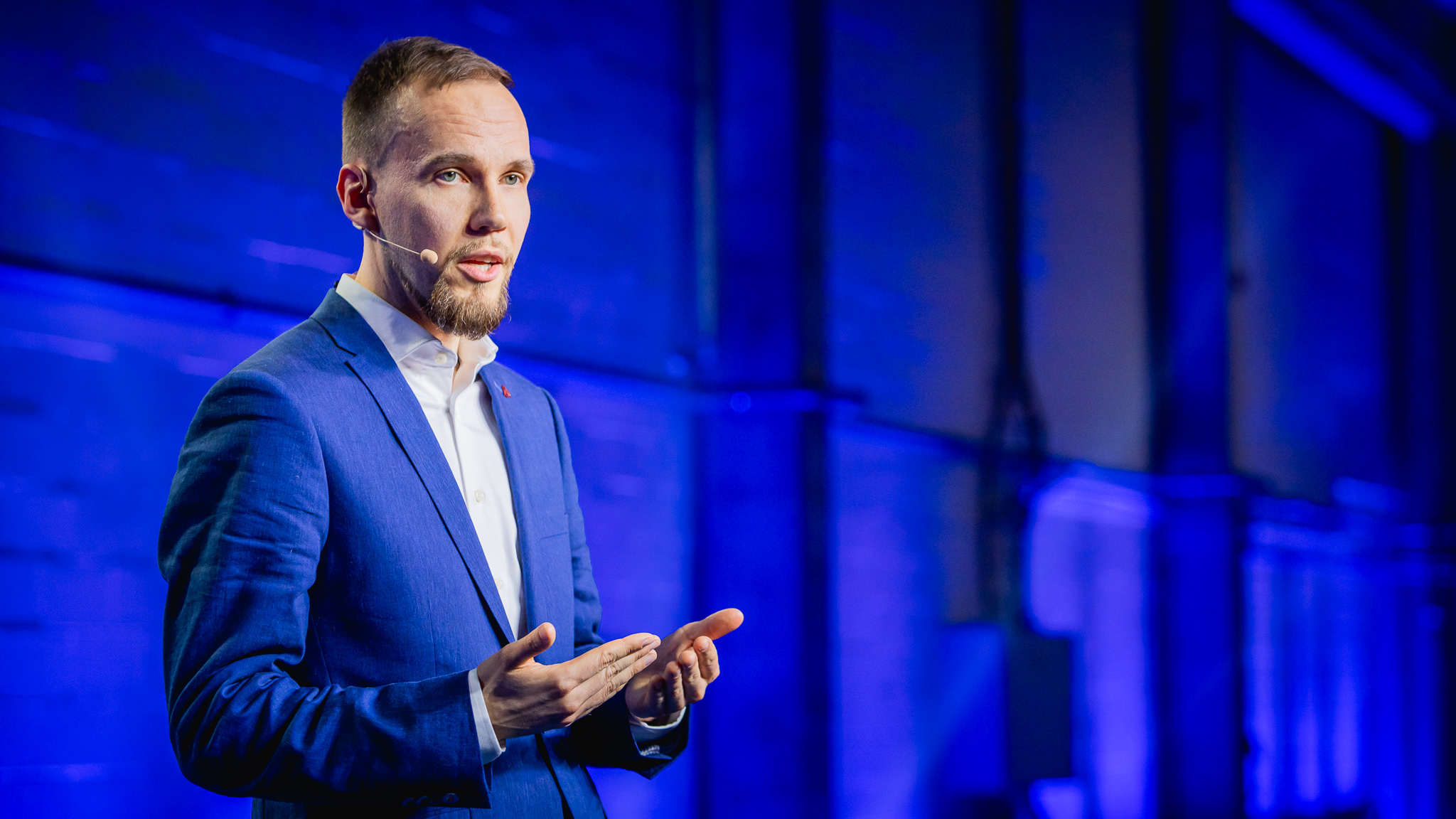
It is difficult to describe Priit Ilomets, Head of Metrosert’s Hydrogen Technologies Unit, with a single job title. Leader, chemist, trainer, strategist, coach and AI educator all fit, yet none of them quite captures the whole picture. Throughout his career, one theme has remained constant: transformation – how new technologies emerge, how organisations evolve, and what enables people to navigate profound change.
It is therefore no surprise that he now leads Metrosert’s hydrogen technologies field. As Estonia’s hydrogen economy continues to gain momentum, it requires not only technical expertise but also the ability to see the bigger picture, bring diverse stakeholders together and think years ahead – precisely the kind of challenge that has always inspired Ilomets.
“I’m fascinated by situations where nothing is fully defined yet. When there are more questions than answers, that’s when you can truly shape something. Those are the moments when you learn the most and have the greatest opportunity to make an impact.”
Science Was in His Blood, But Not in His Plans
Priit’s life and career have unfolded largely within a few kilometres between Nõmme and the Tehnopol Science and Business Park in Mustamäe, Tallinn. He was born there, earned two university degrees there, worked in start-ups, the chemical industry, the Centre of Food and Fermentation Technologies (TFTAK), and today at Metrosert.
Yet his path into science was anything but straightforward.
“I went to Tallinn French School, where my strict chemistry teacher thought my knowledge deserved little more than a barely passing grade. Mathematics was difficult for me too. Even today, about once a year, I have a nightmare in which I discover that I must retake my secondary school maths exam in order to graduate,” Priit laughs.
Despite this, he chose Applied Chemistry and Biotechnology at TalTech university.
“I was always drawn to the practical side of things. What fascinated me wasn’t abstract theory but the process itself – designing experiments, setting them up, carrying out syntheses and analysing the results. I was captivated by strategy, systems thinking and the bigger picture. It was the same curiosity that led me to spend thousands of hours playing chess and other board games. Later, while studying in Amsterdam, it even enabled me to earn a living playing online poker on sixteen tables simultaneously. It was pure mathematical strategy and real-time risk management.”
His interest in science, however, did not emerge from nowhere. Priit is a third-generation educator, and his grandfather was Tullio Ilomets, a distinguished chemist, honorary citizen of Tartu, one of the founders of the University of Tartu Museum and widely regarded as the founder of natural compounds chemistry in Estonia. One of his grandfather’s best-known sayings was: “A chemist is born in the laboratory.”
“I chose chemistry for fairly pragmatic reasons – and to some extent by chance. I was also considering law and logistics. Only later did I realise that my family background had probably influenced me more than I had understood.”
A Changing Worldview
During his university years, Priit’s interests extended well beyond chemistry. He listened to the YouTube series Symphony of Science, read science fiction and philosophy, and believed that the world could largely be explained through the natural sciences.
“When I was younger, I was quite a proud advocate of scientific materialism. I believed everything important could be explained rationally.”
His worldview began to shift in his mid-twenties after reading Daniel Kahneman’s Thinking, Fast and Slow.
“I realised we’re nowhere near as rational as we like to think we are. That was when a completely different world began to open for me. Looking back, that insight was probably what eventually led me towards coaching and depth psychology.”
In retrospect, Priit believes this was also when his role as a bridge-builder began to take shape. What attracted him was not science, business or psychology on their own, but the intersection between them.
“I feel equally at home among scientists, entrepreneurs, executives, coaches and therapists. What fascinates me is how different worlds and different ways of seeing the world come together.”
Becoming the Head of a Research Centre at 28
Priit took his first step into the world of entrepreneurship at the age of 25, when he joined a start-up at the invitation of Madis Raukas. The company was developing anatomically accurate 3D kidney models made from gelatine.
“I was the company’s CEO and its only full-time employee. That experience introduced me to the world of accelerators and incubators, but even more importantly, it taught me the value of building relationships.”
He later joined the Centre of Food and Fermentation Technologies (TFTAK) as Business Development Manager. Not long afterwards, the centre’s CEO passed away unexpectedly, and at just 28 years old Priit was offered the daunting challenge of leading the research centre.
“At the same time, I was completing my coaching training, which turned out to be an enormous source of support in my new role. However, I’ve never really considered myself a scientist, and being a CEO isn’t quite my natural role either. If you compare a company to a country, I’m more of a president than a prime minister. I’m drawn to the bigger picture, strategy, teaching and building bridges between different worldviews rather than operating at full speed, optimising and fine-tuning every detail.”
Yet Priit’s restless nature made him long to drive changes that went beyond organisations. Coaching gradually became an increasingly important part of his life.
“I wanted to help leaders gain clarity, move towards their goals and serve as their accountability partner. I made a bold decision that shocked many of my colleagues at the time: I stepped down as CEO of the research centre and dedicated myself to supporting transformation at the level of the individual.”
Painful Lessons
Priit’s career has not been a steady upward climb. One of its defining moments came at the beginning of the COVID-19 pandemic. Together with a business partner, he had launched a cultural and entertainment centre in Tartu, but the project went bankrupt, leaving them with six-figure debts.
Ilomets does not try to romanticise the experience, nor does he see it as something to be brushed aside.
“Going through bankruptcy teaches you a great deal about people – including yourself. Looking back, it was one of the most formative experiences of my life. During those difficult times, what carried me through was my natural optimism. I’m simply not prone to depression. To me, the glass is always half full. I’ve always believed that things work out and that every difficult situation contains hidden potential.”
It was during this period that coaching evolved from an interest into a second career. His desire to help people navigate difficult transitions and gain clarity about their goals became central to his work.
“When you learn to accompany people deeply through their stories, you realise there’s always a common thread: transformation, a profound change, a metamorphosis.”
A Life Change That Called for Stability
After his time in Tartu, Priit went on to lead another health technology start-up, Elsavie, which focused on the human microbiome and personalised health solutions. While the start-up world continued to offer exciting challenges, his personal life was changing. After the birth of his child, he increasingly found himself looking for an opportunity to build something with a longer time horizon.
“Hyper-uncertainty is simply part of life in start-ups. When my family grew at the end of 2023, I realised I wanted something more stable alongside it, yet intellectually just as stimulating. Then, in January 2024, I unexpectedly received a call from a headhunter asking whether I’d be interested in building and leading a hydrogen technologies unit at Metrosert’s newly established Applied Research Centre. The offer came completely out of the blue. I never imagined I’d work in chemistry again, let alone in hydrogen technologies and electrochemistry. But I decided to immerse myself in the field and dive in headfirst.”
Hydrogen: A Long-Term Perspective
While success in many industries is measured in quarters or years, Priit believes energy technologies require thinking in decades.
“The question isn’t only what can be achieved today. It’s what capabilities Estonian companies will need ten years from now. If we don’t start building them today, they simply won’t exist.”
It is with exactly this long-term perspective that Metrosert has been developing its Hydrogen Technologies Testing Centre. A business plan drafted several years ago is now steadily becoming reality.
“We’re not starting from scratch. We’re standing on the shoulders of giants -on decades of hydrogen and electrochemistry expertise built up in Estonia. Metrosert’s role is to build the next layer on top of that, giving companies the opportunity to develop and test the next generation of hydrogen technologies.”
According to Priit, the hydrogen sector has gone through its fair share of hype in recent years, but the excitement has now given way to a much more realistic outlook. The serious players have remained, and the focus has shifted from ambitious promises to practical applications.
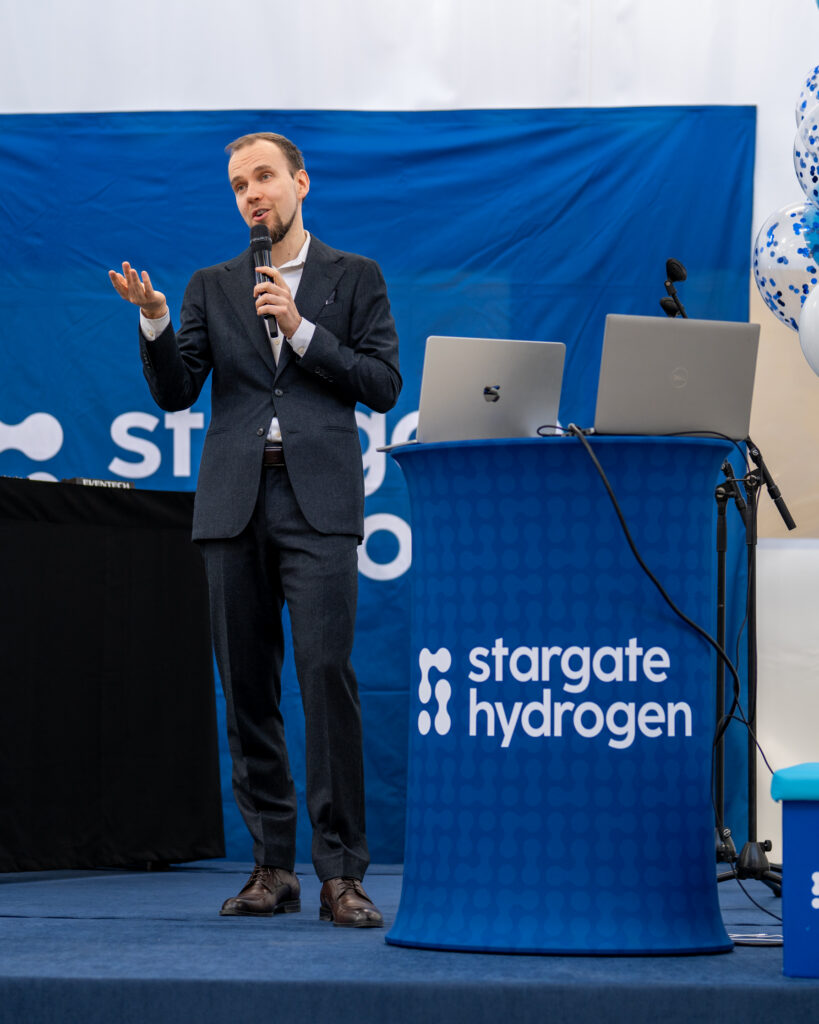
“Hydrogen isn’t some brand-new invention – it’s an industry that’s been around for well over a hundred years. Its greatest contribution still lies ahead in the energy sector, but that certainly doesn’t mean the entire global economy will one day run on hydrogen. Most people probably associate hydrogen with passenger cars but compared to battery-electric vehicles that’s not necessarily the most sensible application. The real opportunities are much broader – in the chemical industry, methanol production and many other fields where hydrogen can help make industrial processes cleaner and reduce reliance on fossil fuels.”
Priit believes he has found a field where he intends to stay for the long term.
“At Metrosert I’m surrounded by an outstanding team and excellent partners, and I’m genuinely looking forward to working with our new management board. Although I’m especially energised by the early building phase of new initiatives, I believe I’ll remain part of the hydrogen community for many years to come. The field is approaching a major turning point, and it’s filled with exceptionally competent people who genuinely support one another.”
Priit also sees a deeper philosophical dimension in hydrogen technologies.
“For me, working with hydrogen is, in a way, a process of individuation. In psychology, individuation means bringing fragmented parts together into a whole – becoming who you truly are. In my daily work, I help transform dispersed energy – sunlight and wind – into a carrier that can be stored and released when needed. I like to think that, in the world around me, I’m engaged in the same movement I strive for within myself: transforming what is fragmented into something whole and capable of carrying real strength.”
A New Turning Point: Artificial Intelligence
As Priit immersed himself in the world of hydrogen, another major transformation was taking place in his life. His enthusiasm for technology and innovation, which had begun in start-ups and chemistry laboratories, found a new outlet about three years ago when ChatGPT became publicly available. Priit immediately recognised that this was not just another digital trend, but a breakthrough that would reshape almost every aspect of life.
“I believe the best way to truly understand something is to try teaching it to others.”
That idea led him to organise his first hands-on AI workshop for coaches and supervisors. From there, things quickly gathered momentum: in-house corporate training, keynote presentations at conferences, and a long-term partnership with Äripäev Academy. To date, he has trained more than a thousand executives and professionals in the practical application of artificial intelligence and was named Äripäev’s Trainer of the Year.
At Metrosert, AI has become one of his everyday tools. He uses it to develop strategies, conduct market analyses, prepare public procurement documentation and support his own self-reflection. While the rapid advancement of artificial intelligence has led many to wonder whether machines might one day surpass humans, Priit does not share that concern.
“AI is silicon-based – just ones and zeros that give rise to extraordinary complexity. Human beings, on the other hand, are a biochemical symphony built from amino acids. Genetically speaking, because of our microbiome – our gut ecosystem – we are, in many ways, more bacteria than human. It is this living, unpredictable and emotional dimension that makes us who we are and determines our quality, including our ability to lead. The most valuable leadership is about building relationships, empathy and creating psychological safety. Artificial intelligence cannot replace that.”
What Keeps the Fire Burning?
Outside work, most of Priit’s time belongs to his family. His two-and-a-half-year-old child will soon start kindergarten, and he and his fiancée have just broken ground on the construction of their new home. A former Baltic squash champion, he still finds time to pick up a racket now and then, meet friends for weekly gatherings, and record podcasts.
“Just search Spotify for the ‘Priit Ilomets podcasts’ playlist – there’s quite a collection there!” he laughs.
In reality, however, it is difficult to draw a clear line between Priit’s work and his hobbies. Artificial intelligence is not merely a professional tool for him but also an instrument for personal growth and self-reflection. In recent years, he has built what he calls an AI-powered “digital brain” – a continuously evolving personal knowledge base containing years of thoughts, observations and reflections. It helps him regularly review what has gone well, what he has learned and where he wants to go next.
“I recommend this to the leaders I coach as well. We tend to forget remarkably quickly how many great things have happened in our lives. If you consciously look back once a year, you gradually build a chronicle of your own life. Only then can you decide what you want the next chapter to look like. If you don’t shape your own life, circumstances will shape it for you.”
So, what advice would someone with so many different careers give to young people still searching for their calling? Priit refuses to talk about specific professions or predict which technology will dominate the next decade. Instead, he believes the most valuable qualities are curiosity, the ability to learn and self-awareness.
“Stay curious. Follow where your curiosity takes you, because knowledge has never been easier to acquire than it is today – and at the same time, there are fewer excuses than ever not to learn. Learn how to learn, learn how to regulate your nervous system, and build meaningful relationships with people, because business is ultimately done between people, not companies.”