
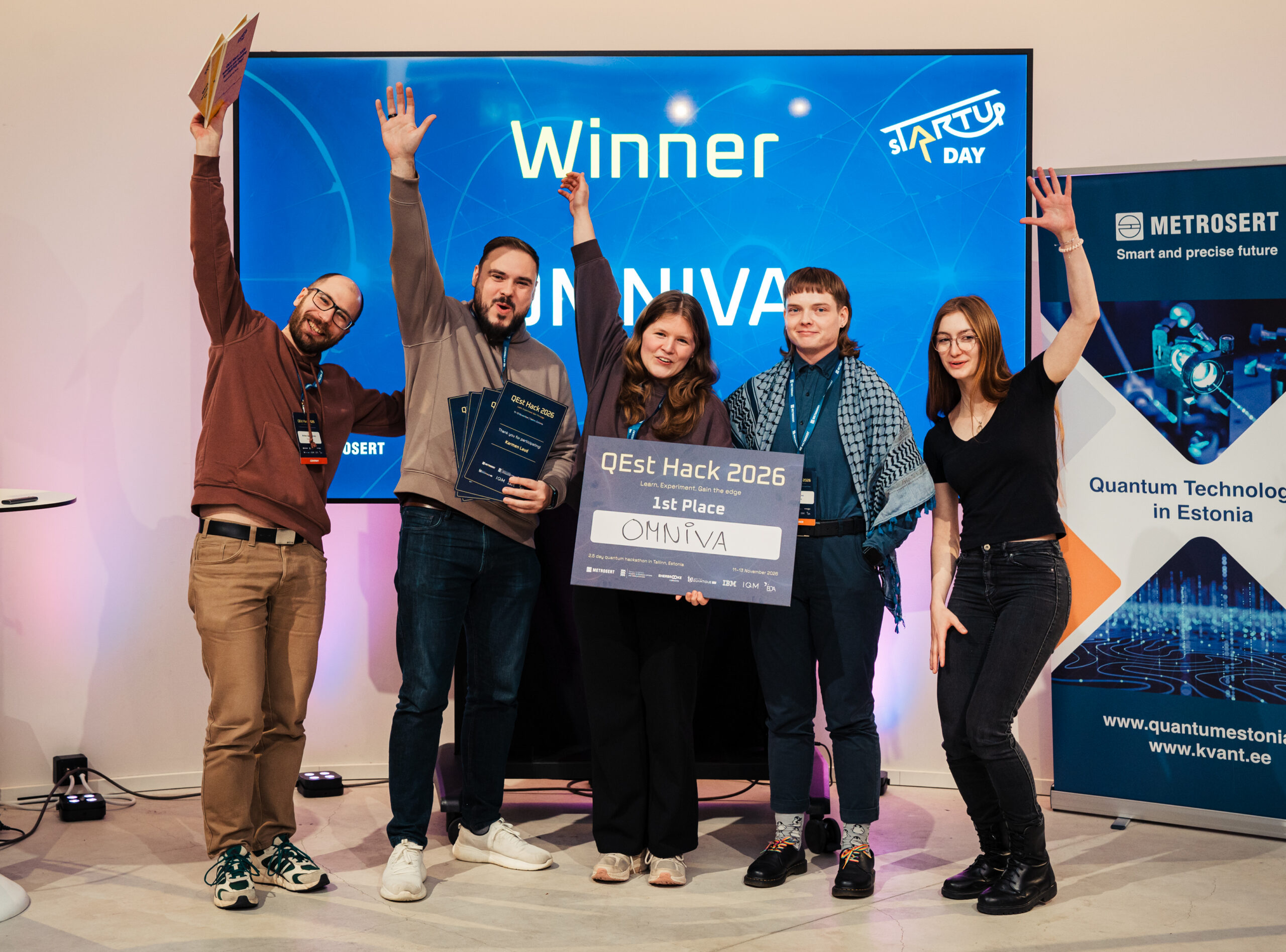
Estonian logistics company Omniva has won QEst Hack 2026, a quantum computing hackathon held in Tallinn, Estonia. Its team explored whether quantum computing could help improve parcel delivery route planning.
At the hackathon, six Estonian companies explored solutions to a wide range of problems—from building investment portfolios and scheduling nurses’ shifts to forecasting electricity sales and readers’ interest in news.
According to Deniss Kross, Omniva’s Engineering Manager and a member of the winning team, the hackathon revealed that planning parcel deliveries across Tallinn using the team’s chosen method would require a considerably more powerful quantum computer than those available today. Through the three-month pilot project awarded as the prize, the company will explore other algorithms and ways to use a quantum computer alongside a conventional computer to tackle smaller tasks.
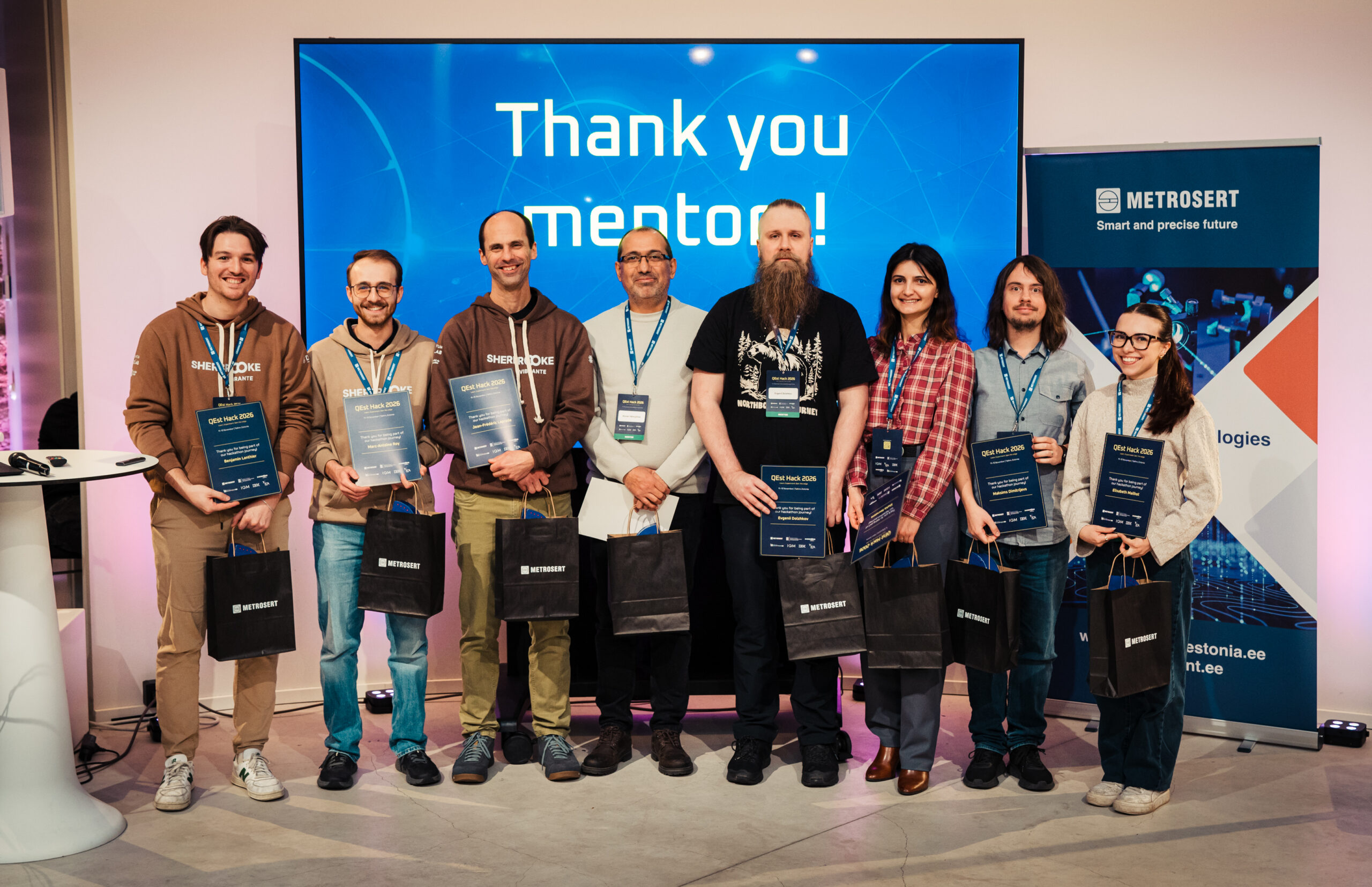
“We realised that the next step is to identify smaller tasks within parcel delivery planning where quantum computing could help—for example, quickly replanning a delivery route following a traffic accident. Our upcoming collaboration with quantum experts will give us an opportunity to discuss which parts of the problem to explore further and which methods to try,” said Kross.
This year’s QEst Hack brought together six teams, each with a business problem that conventional computing methods cannot always adequately address. Alongside Omniva, participants included Coop Pank, Eesti Loto, Gräfik, KratTrade and Postimees Group.
Their challenges ranged from optimising electricity sales and investment portfolios to improving staff scheduling. Teams also explored methods for predicting customer behaviour to help retain customers for longer.
A starting point for future quantum engineers
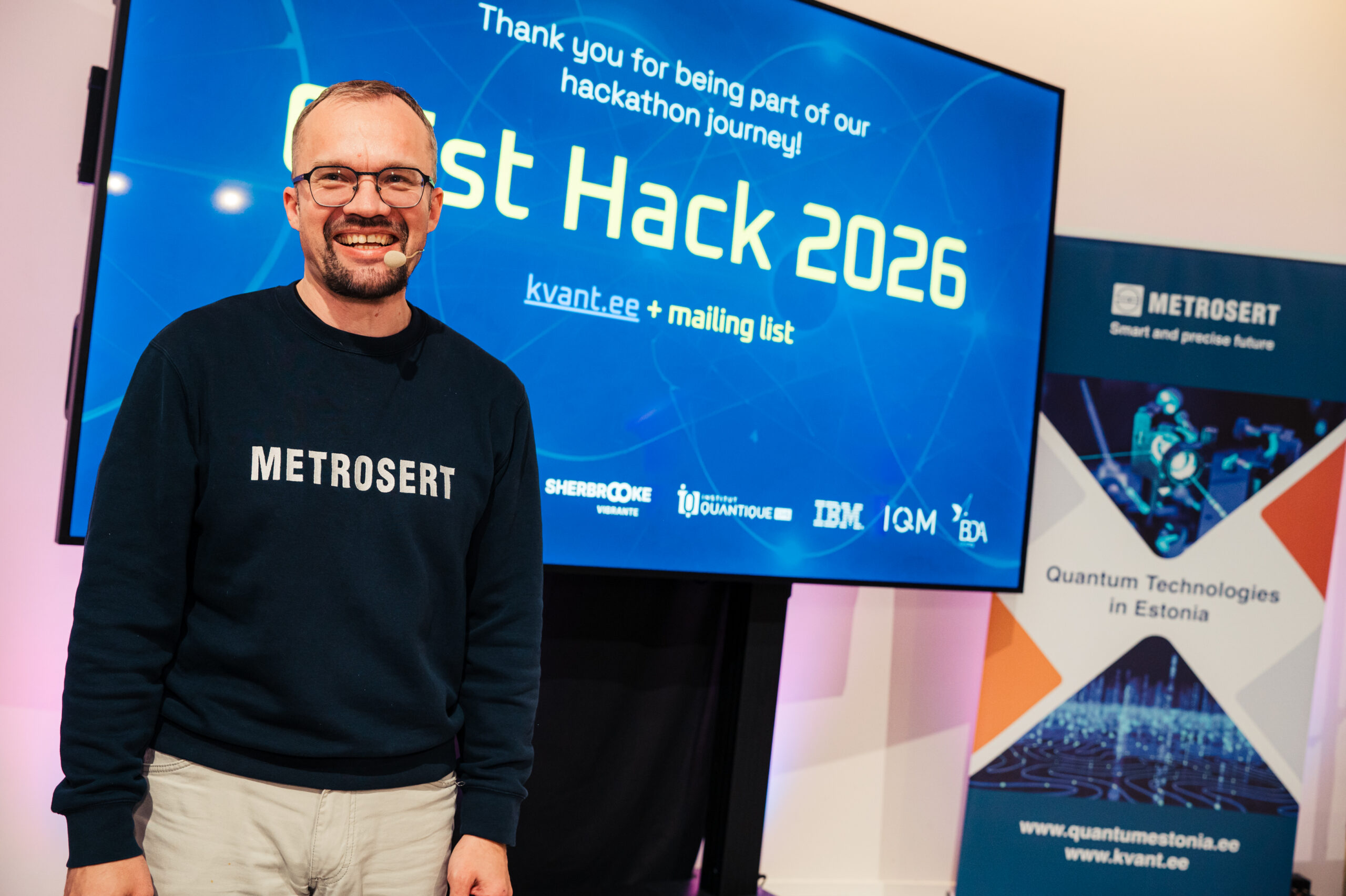
According to Kalev Kaarna, Business Development Manager at Metrosert, this year’s hackathon stood out for the participants’ stronger preparation. Every team included people with previous experience in quantum computing, helping newcomers learn faster and make progress with their tasks.
“The rules required team members who had never worked with quantum algorithms before to present their teams’ work to the jury. It was fascinating to see teams reach for pen and paper and explain the calculations to one another until everyone understood, rather than immediately turn to AI for help. I have never seen people so passionately solving maths problems late into the night as I did at this year’s hackathon,” said Kaarna.
“Within the next few years, these talented participants could become the first quantum engineers working in Estonian companies, identifying opportunities and developing solutions. Specialists with these skills will be highly sought after,” Kaarna added.
Karmen Laud, an IT master’s student at the University of Tartu and a member of Omniva’s winning team, had no previous experience in quantum computing. With the help of her patient and supportive teammates, she progressed to the point where she could suggest approaches herself and present the team’s results to the jury.
“My experience shows that you don’t need prior knowledge of quantum computing to win a quantum hackathon. Curiosity and courage matter much more. My debating experience certainly helped me present our results: it teaches you to get to grips with a new subject quickly and express your ideas clearly, even when the topic is completely unfamiliar. I warmly recommend debating to everyone,” said Laud.
Bringing businesses and quantum talent together
According to Kalev Kaarna, the quantum hackathon aims to give companies, students and other interested participants an opportunity to learn about the principles and potential applications of quantum computing through a playful, competitive format.
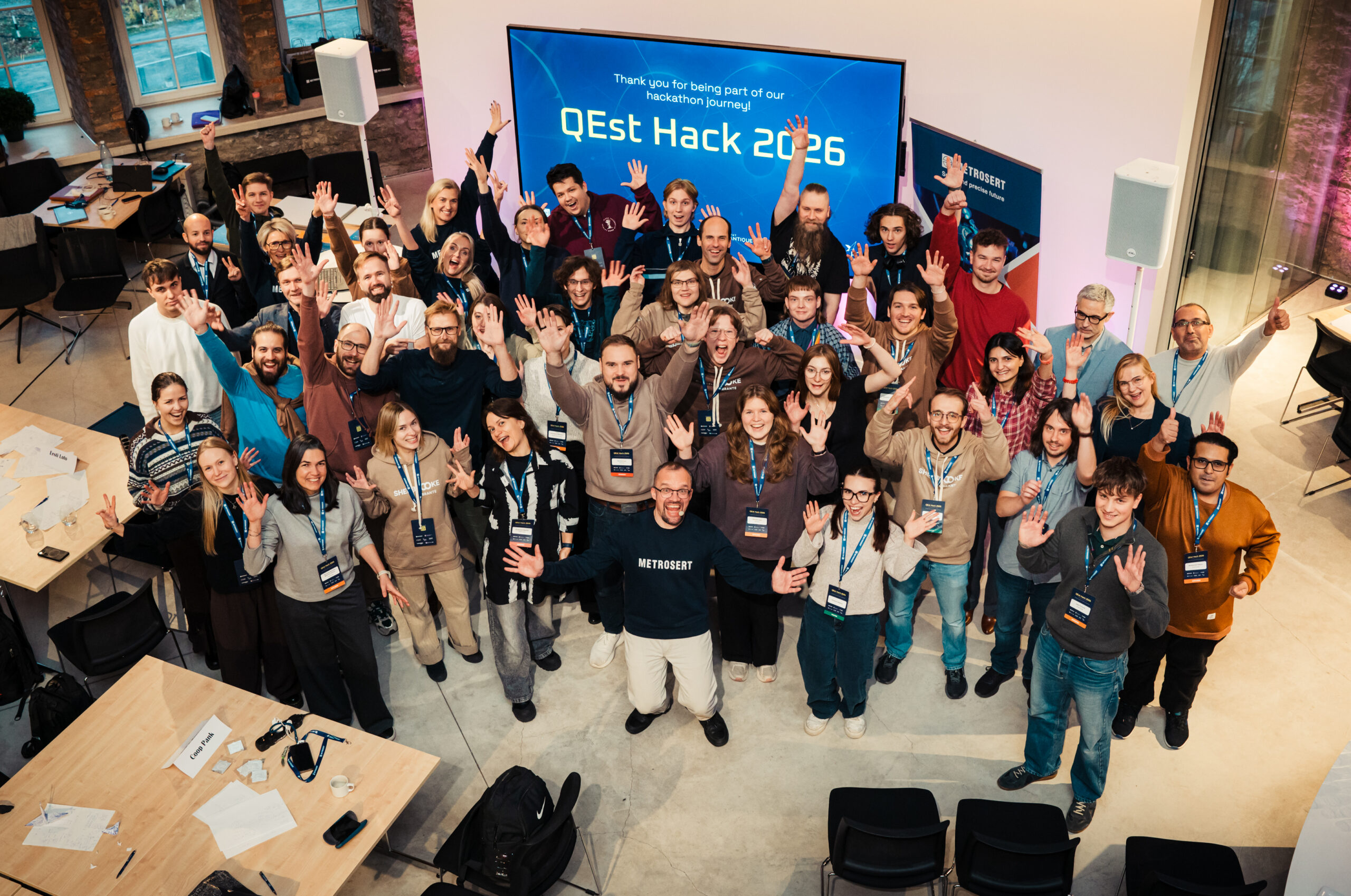
Metrosert organised QEst Hack 2026 in cooperation with BDA, IBM, IQM, the Canadian city of Sherbrooke and the Institut quantique at the Université de Sherbrooke. The hackathon was supported by Estonia’s Ministry of Economic Affairs and Communications. The winning team received a three-month pilot project with quantum experts and tickets to the sTARTUp Day festival.
Photos: Tiit Tamme