
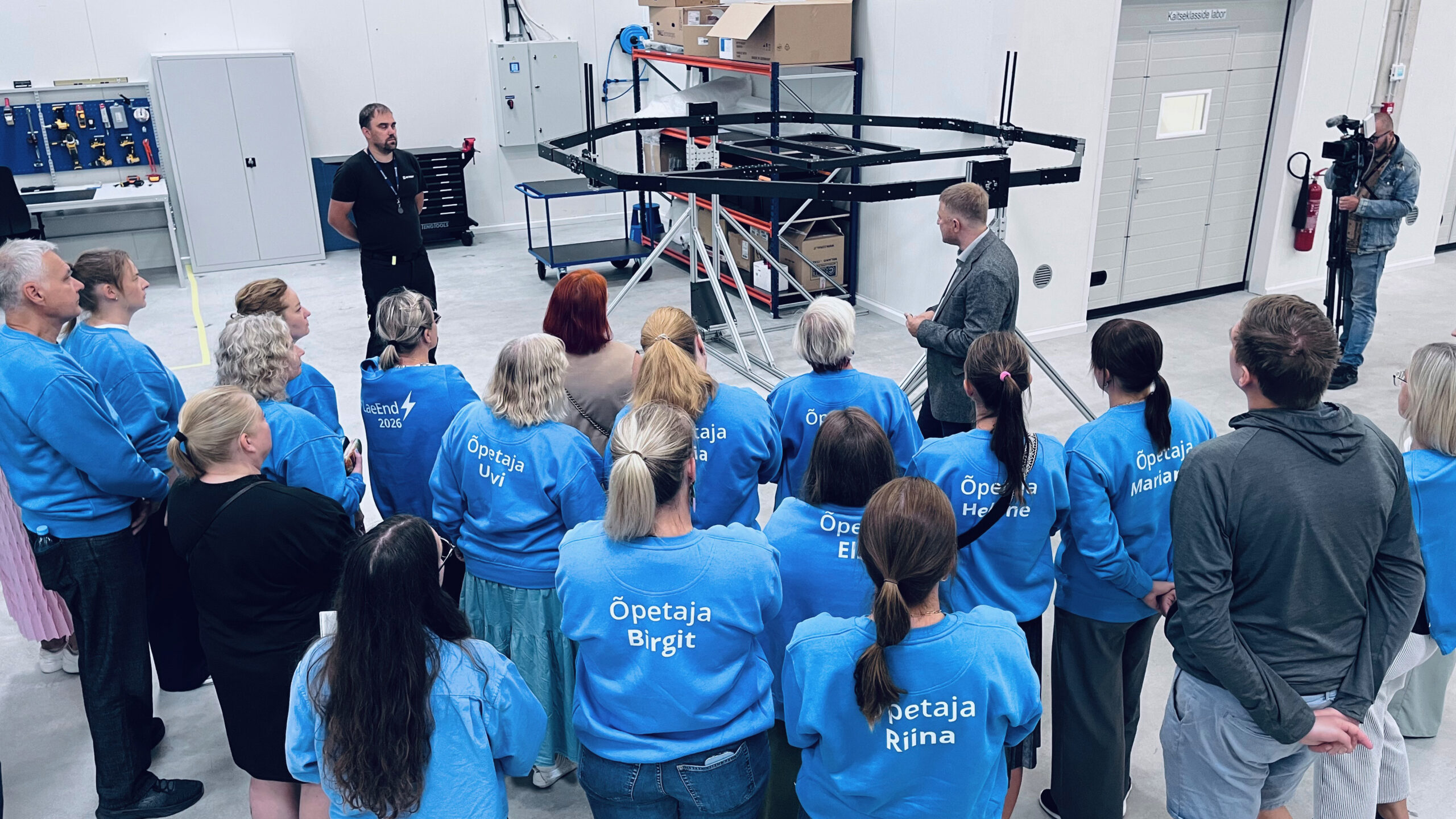
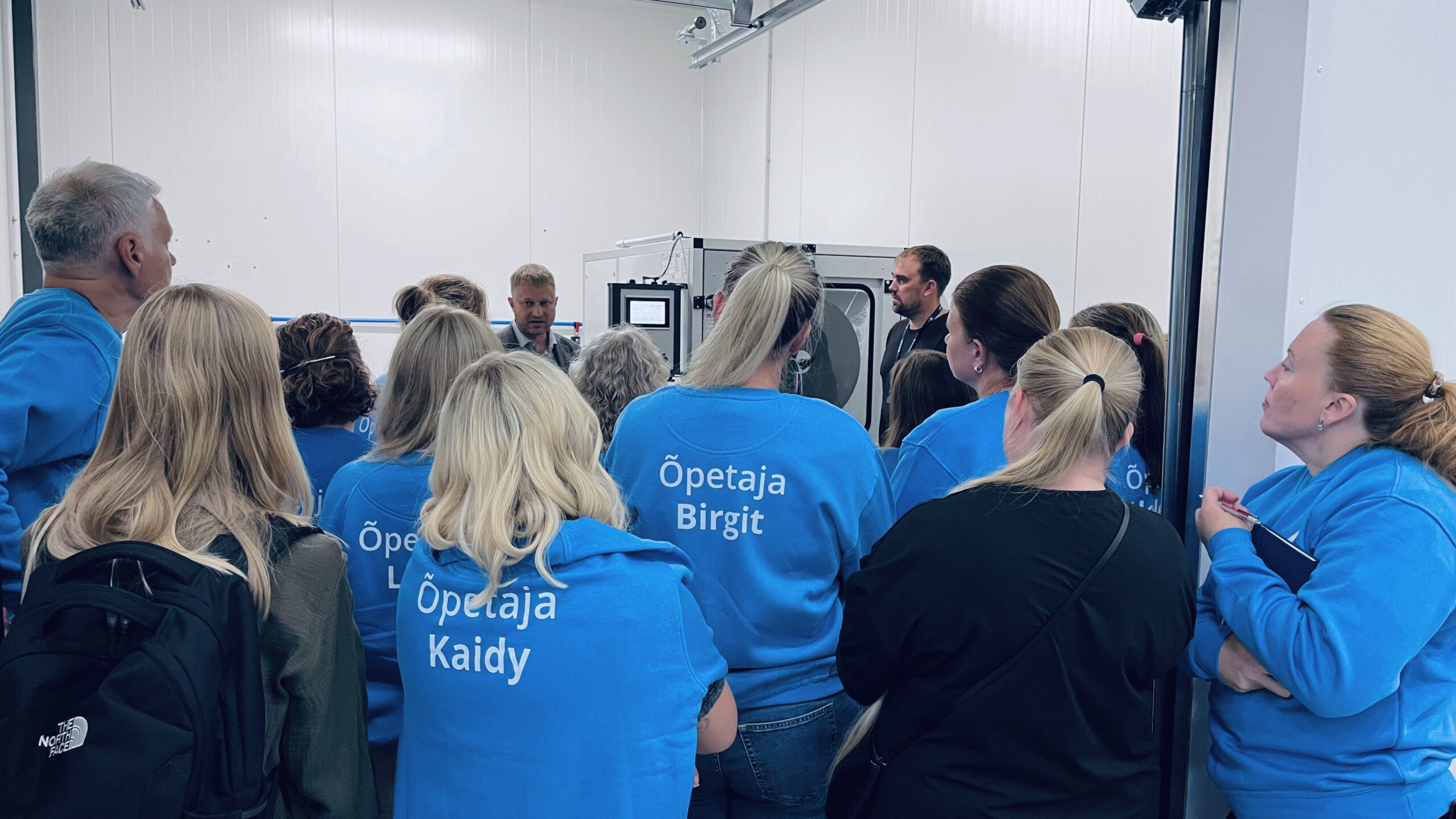
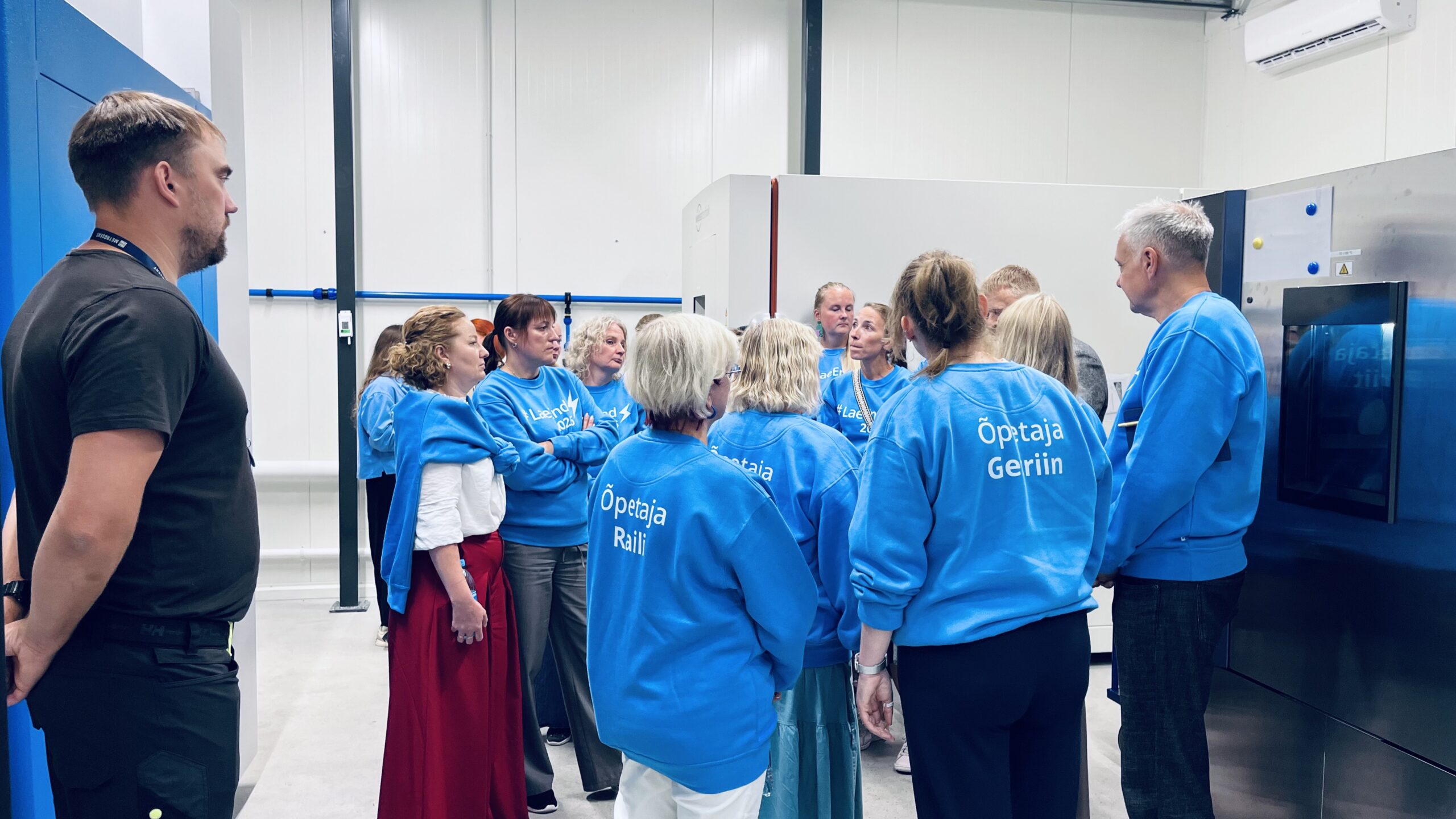
The 20 new teachers selected for the “Lae End” educational program gathered for their first training session, a highlight of which was a visit to Metrosert’s drone testing center. The teachers had an extraordinary opportunity to tour the drone and defense technology testing laboratories unique in Estonia.
The center consists of nine laboratories focused on the product development, validation, and industrialization of unmanned aerial, land, and maritime systems. According to Rainer Kivimäe, Head of the Drone Technologies Unit at Metrosert’s Applied Research Center, the testing center helps strengthen Estonia’s research and development capabilities, particularly in the defense sector. “The rapid development of unmanned systems requires a knowledge-intensive approach. The infrastructure of Metrosert’s testing center is designed to support the development and industrialization of autonomous systems, focusing on critical technologies such as secure communications, flight physics, and hardware security. It is extremely important that knowledge of real innovation reaches teachers directly through the Lae End program, helping them inspire a new generation of top engineers in schools,” said Kivimäe.
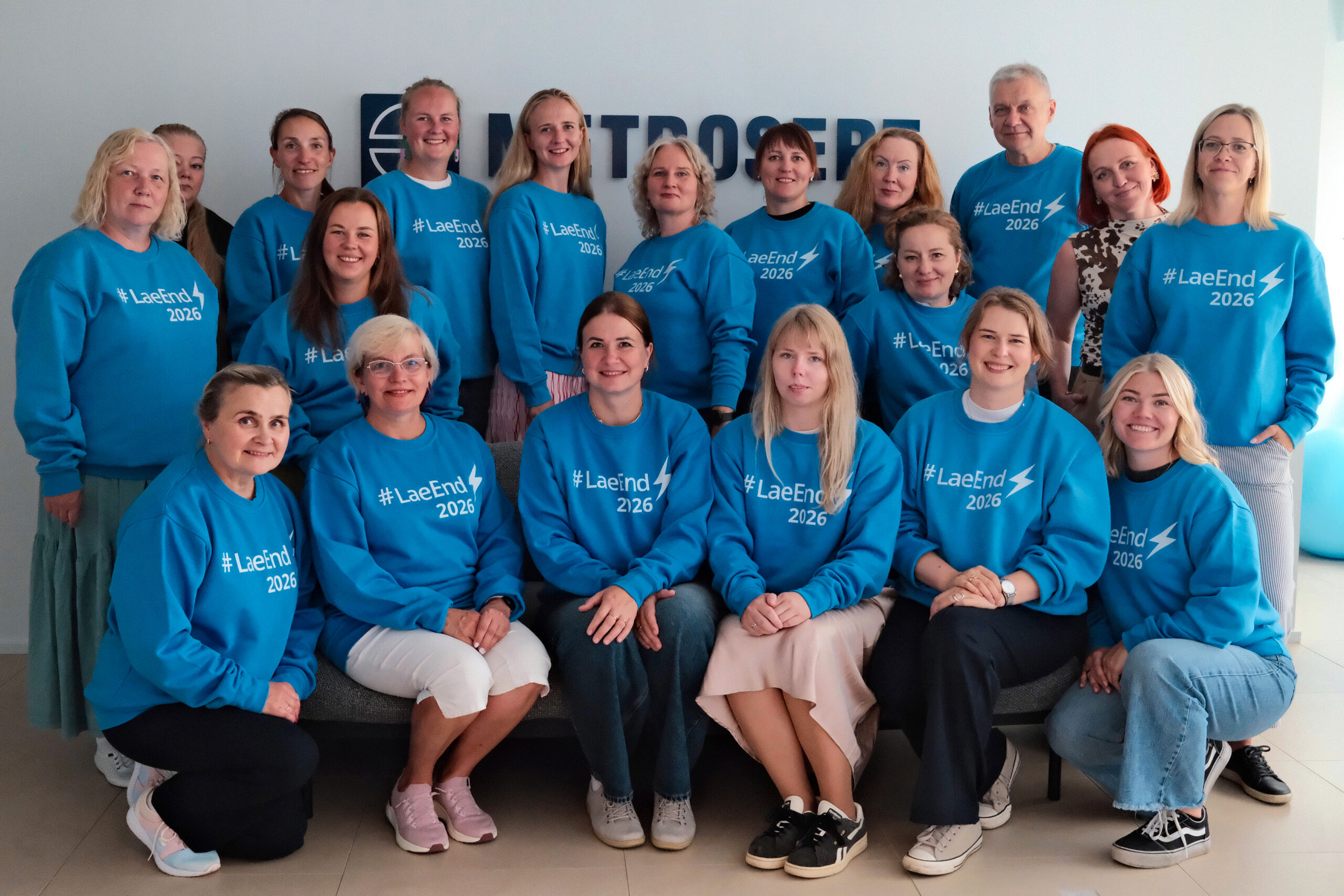
Teachers from seven counties are participating in the fifth season of Lae End:
Anneli Nellis (Tõrvandi Kool), Birgit Kuslap (Põltsamaa Ühisgümnaasium), Ele Jaanimägi (Pärnu Vanalinna Põhikool), Elsa Veinberg (Tabasalu Kool), Getriin Kokk (Lodijärve Kool), Hanna-Liisa Nõmme (Kõrveküla Põhikool), Helene Kala (Ääsmäe Põhikool), Kaidy Õismets (Haabneeme Kool), Katrin Rohumaa (Gustav Adolfi Gümnaasium), Lenneli Aasa (Vanalinna Hariduskolleegium), Liivi Kivimäe-Bondarev (Merivälja Kool), Maila Visnap (Viljandi Jakobsoni Kool), Marianne Volmerson (Alavere Lasteaed-Põhikool), Nadezda Lesik (Audentese erakool), Priit Saareleht (Kaarli Kool), Raili Haugas (Keila Kool), Raili Veelmaa (Rakke Kool), Riina Alev (Väätsa Põhikool), Tiia Tasuja (Saue Kool) ja Ulvi Kaasik (Lähte Ühisgümnaasium).
During the five-month training program, participants will visit other partners and companies, and practical teaching materials will be created that can be used by teachers across Estonia. As a new feature this year, a digital competencies day will also be held for basic school STEAM teachers (STEAM combines science, technology, engineering, arts, and mathematics through practical learning).
Participants receive up to €2,000 in support to develop their school’s laboratory or learning environment. Program graduates also receive a financial reward of €2,403, which corresponds to the average gross monthly salary of a teacher in Estonia.
A total of 72 teachers applied for the program this year: 58 mathematics teachers and 14 physics teachers. Based on application forms and video submissions, the jury selected 20 teachers for the 2026 program: 12 mathematics teachers and 8 physics teachers. The higher proportion of mathematics teachers was due to a lower number of physics teacher applicants this year.
According to the Estonian Qualifications Authority (Kutsekoda) OSKA forecasting system, the need for replacement teachers remains high, with the largest shortages among mathematics and science teachers. To spark young people’s interest in STEM, inspiring teachers are needed who connect what is learned to real life and encourage students to ask questions, doubt, and experiment. For this to happen, teaching must also be exciting for the teachers themselves. This is precisely what the Lae End program offers by bringing teachers together with educational innovators.
Lae End is an educational program supported by ABB, Filter, Enefit, LHV, Metrosert, and Nordecon, aimed at making science education more engaging. The program’s partners are the Estonian Mathematical Society, the Estonian Association of Chemistry Teachers, the Estonian Physical Society, TalTech, TI-Hüpe, Praktikal, Videoõps, and the Energy Discovery Centre.