
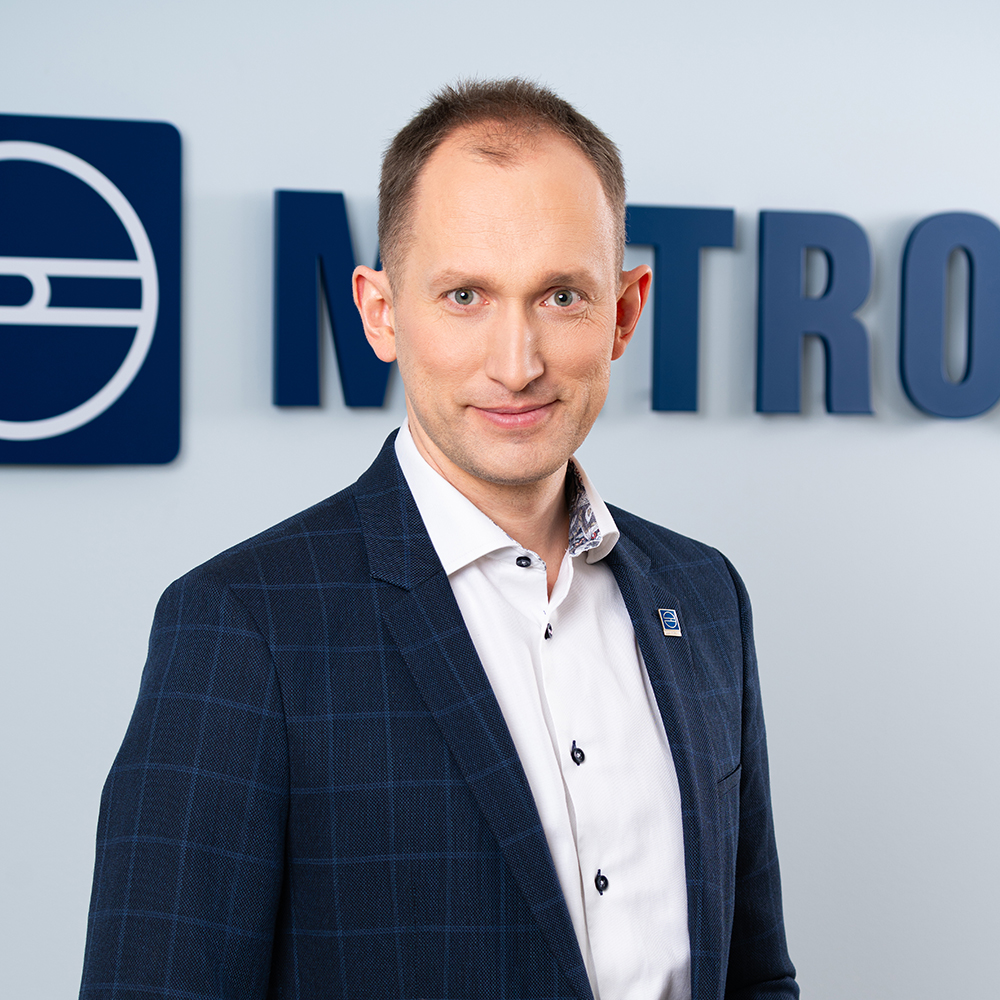

Aigar Vaigu — Metrosert board member, physicist, and science populariser — writes in an essay for Äripäev that, to preserve Estonia’s competitive edge as a digital nation, the country must make rapid strategic investments in quantum technology and the development of related competencies, as both cybersecurity and future economic opportunities are at stake.
Estonia has achieved broad international success thanks to its digital public sector and the foresight of its technology industry. This success is built on today’s classical computers that operate on binary logic. However, this era is reaching its limits: the demand for ever-greater computational power (for example, for the development of artificial intelligence) is colliding with the physical boundaries of classical computers in terms of energy, heat, and miniaturisation.
Experts estimate that the era of quantum computers is approaching and will likely arrive within 5–30 years. A quantum computer uses the principles of quantum mechanics and, thanks to qubits’ ability to exist in several states simultaneously, can achieve vastly greater computational power for certain tasks compared to today’s supercomputers.
Opportunities and risks
The advent of quantum computers will bring major benefits, such as enabling the creation of new materials and medicines through precise modelling of chemical reactions, optimising supply chains, and assessing financial risks more accurately than before.
At the same time, it introduces a sharp cybersecurity risk. A quantum computer is capable of breaking today’s cryptographic keys, jeopardising critical information such as bank transactions, emails, and state secrets.
A rapid transition is unavoidable
Estonia must take two strategic steps immediately:
First, it needs to move toward quantum-safe cryptography (post-quantum cryptography), becoming an early adopter of these unbreakable encryption technologies.
Second, it must expand its scientific and technological capacity. This means investing in research programmes that bring together physics, mathematics, computer science, and cybersecurity to cultivate the necessary generation of scientists and engineers.
Although quantum technology developments — such as Metrosert’s involvement in the EuroQCI quantum communication infrastructure project — are already underway, Estonia’s future depends on whether the state decides now to take the lead or remain a follower.
Full essay was published in Äripäev.