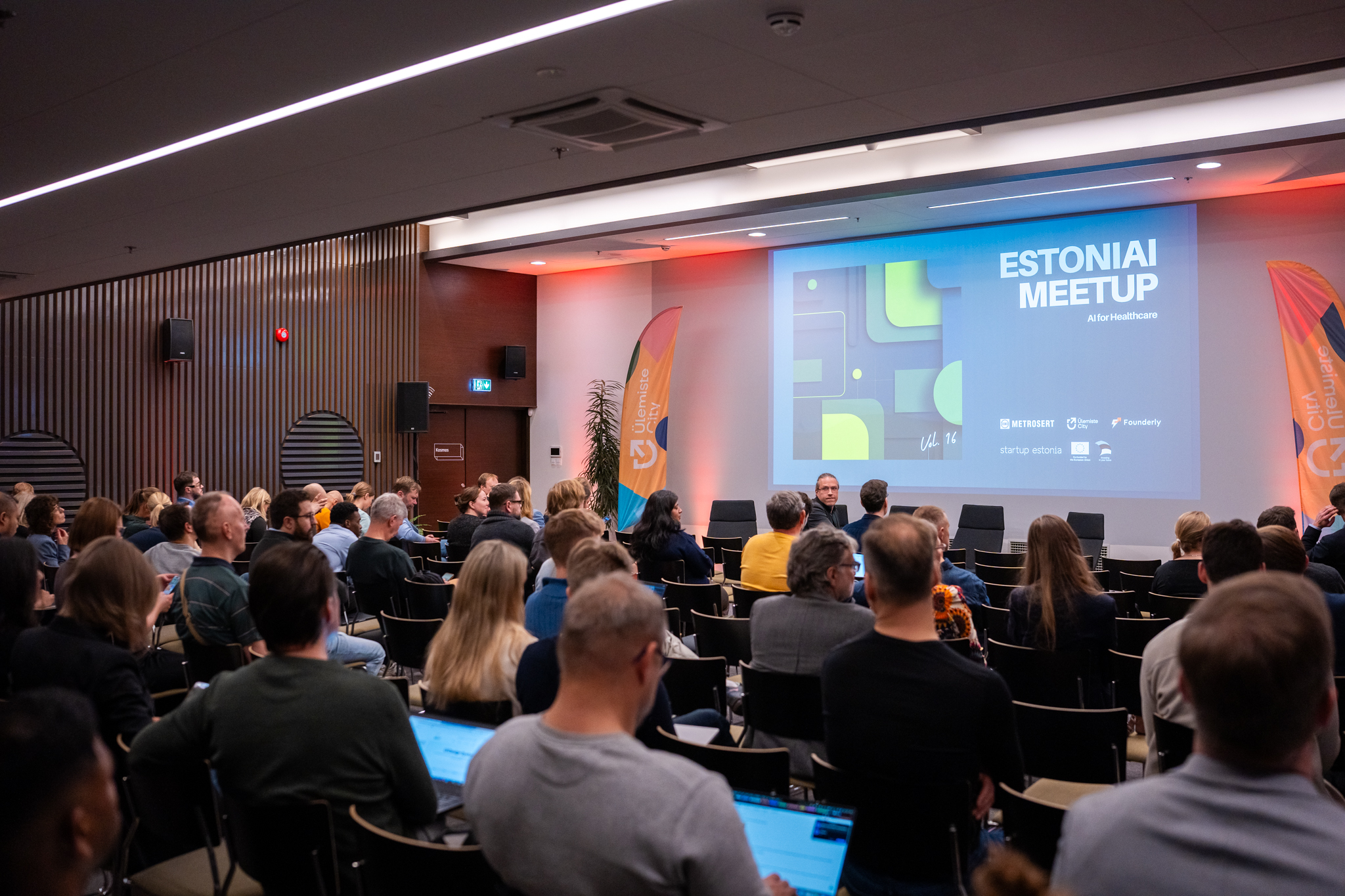
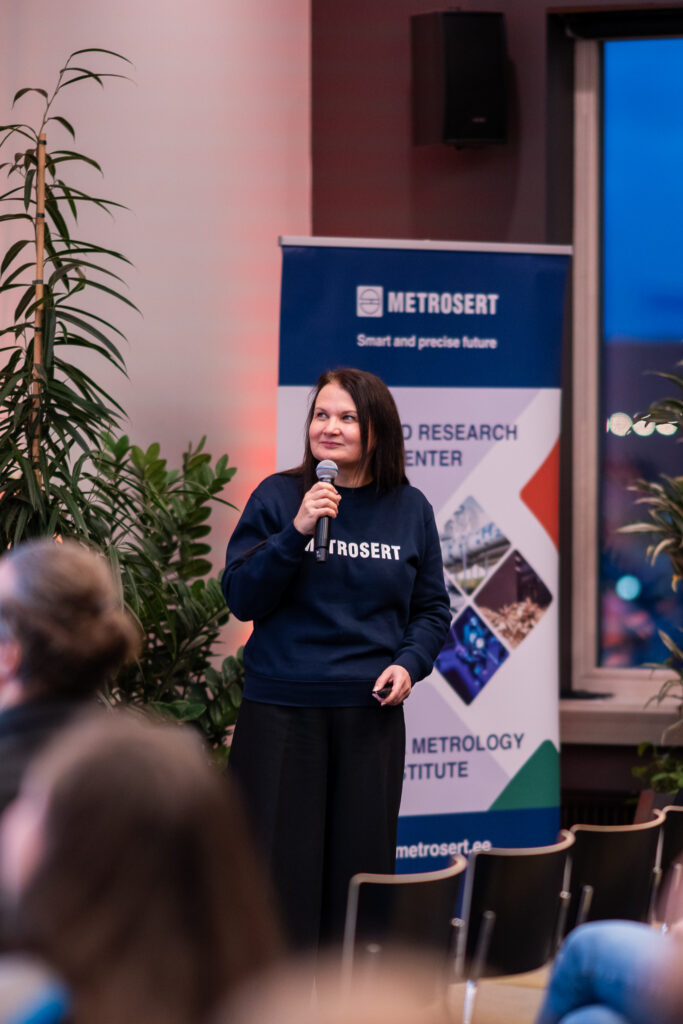
EstoniAI Meetup is a regular event series for the Estonian artificial intelligence community, aimed at bringing together industry experts, companies, and public sector representatives. The series focuses on knowledge exchange and practical discussions that support the adoption of AI across various sectors. Janne Pullat, Head of Health Data at Metrosert’s Applied Research Center, collaborated with Founderly in preparing and shaping the content for the 16th event.
This meeting focused on the healthcare sector—a field where the availability of high-quality data, standards, and clear processes is a prerequisite for AI implementation. The event aimed to bring together key stakeholders to address the use of health data, clinical AI, and the applicability of innovation processes in Estonian healthcare.
Event Focus Areas and Their Importance
The first session covered topics critical to AI applications in healthcare:
- Data quality and standardization, which determine the reliability of AI solutions
- Technical architecture of data flows, enabling safe and reproducible data usage
- Organizational and regulatory processes, influencing the transition of pilot projects into broader implementation
- Collaboration models that support innovation between companies, research institutions, and healthcare providers
The discussions aimed to identify systemic changes needed so that AI adoption does not remain limited to individual pilots but progresses to clinical and service development levels.
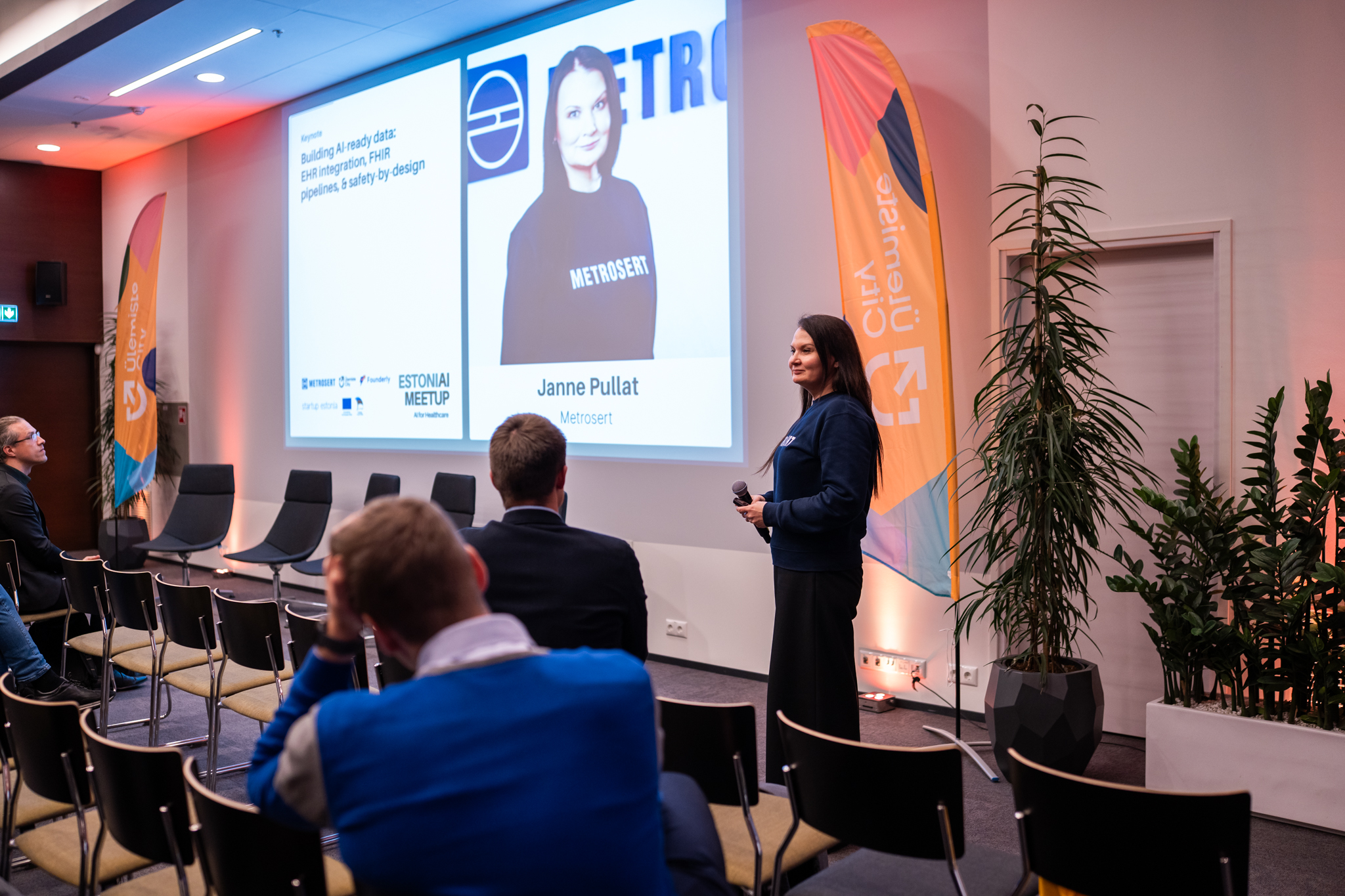
Janne Pullat’s Presentation: Principles for Creating AI-Ready Health Data
Janne Pullat delivered a presentation titled “Principles for Creating AI-Ready Health Data”, providing a structured overview of designing AI-ready health data and covering three main elements:
- Coherence of data flows and mapping of workflows
High-quality health data is created when clinical workflows, digital solutions, and data collection processes form a cohesive whole. The presentation described a methodology for establishing stable and predictable data flows suitable for both analytics and AI applications. - FHIR-based data pathways
The use of standardized data formats is central in healthcare. Implementing FHIR standards enables the creation of flows that support data reuse and ensure interoperability between systems. - Safety-by-design and auditability
Using health data requires a high level of security and accountability. Principles were highlighted to ensure system auditability, risk management, and transparency in data usage—essential for the reliable adoption of AI solutions in clinical settings.
Sameer Pujari (World Health Organization) Presentation: Opportunities and Challenges of AI Adoption
WHO representative Sameer Pujari addressed the adoption of AI in healthcare from a global perspective. The presentation emphasized:
- The importance of standardized validation processes
- A risk management framework supporting the assessment of medical devices and AI models
- The significance of organizational readiness in healthcare institutions
- The role of training and digital competence in adopting new technologies
The goal was to show the prerequisites necessary for AI solutions to move beyond trials into broader use and deliver real value in healthcare.
Throughout the day, the presentations and discussions provided a comprehensive overview of the current state of health data and AI applications in Estonia.
Health Innovation Panel
Participants: Jaanika Merilo (Ministry of Social Affairs), Dmytro Fishman (Better Medicine), Ain Aaviksoo (Mentastic), Siim Saare (Lifeyear), Loora Salurand (Tehnopol)
The panel discussed growth conditions for health tech companies, regulatory bottlenecks, hospital cooperation, and the role of smart capital. There was a shared emphasis on the need to accelerate validation processes and strengthen digital readiness in healthcare institutions.
Research Presentations
- Sven Nõmm (TalTech) – AI in Parkinson’s disease research, focusing on sensor technologies and machine learning models.
- Kaur Alasoo (University of Tartu) – AI in validating genetic targets for drug development.
Both presentations highlighted the need for high-quality, structured health data to accelerate research and development.
Startup Spotlight
Speakers: Bowhead Health, DocAid (Kaur Lohk), RelAIs (Andreas Müürsepp)
The focus was on early-stage health tech solutions and their need for secure and standardized data platforms.
Infrastructure and Regulation Panel
Participants: Silver Kelk (Ülemiste City), Daniel Karsberg (HealthCap), Ville Sirviö (NIIS), Karl Henrik Peterson (Estonian Health Insurance Fund), Silja Elunurm (EIS)
The discussion covered X-tee Beta developments, updates to Estonian Health Insurance Fund’s validation logic, and funding mechanisms affecting AI solution market entry.
The program clearly mapped out technical and systemic factors that support or hinder AI adoption in healthcare.
EstoniAI Meetup Vol. 16 highlighted the need for a unified and well-considered approach to ensuring health data quality, standardization, and security. Metrosert’s Applied Research Center contributed its expertise, focusing on methodologies and technical frameworks necessary for creating AI-ready health data. The meeting confirmed that Estonia’s ecosystem is moving toward a more holistic and collaborative approach, laying the groundwork for AI implementation in clinical settings and healthcare service development.
Special thanks to the Founderly team for the professional organization and content collaboration for EstoniAI Meetup Vol. 16. We also thank all partners whose contributions ensured the smooth execution and high-quality program: Metrosert, Ülemiste City, Startup Estonia, and Founderly.