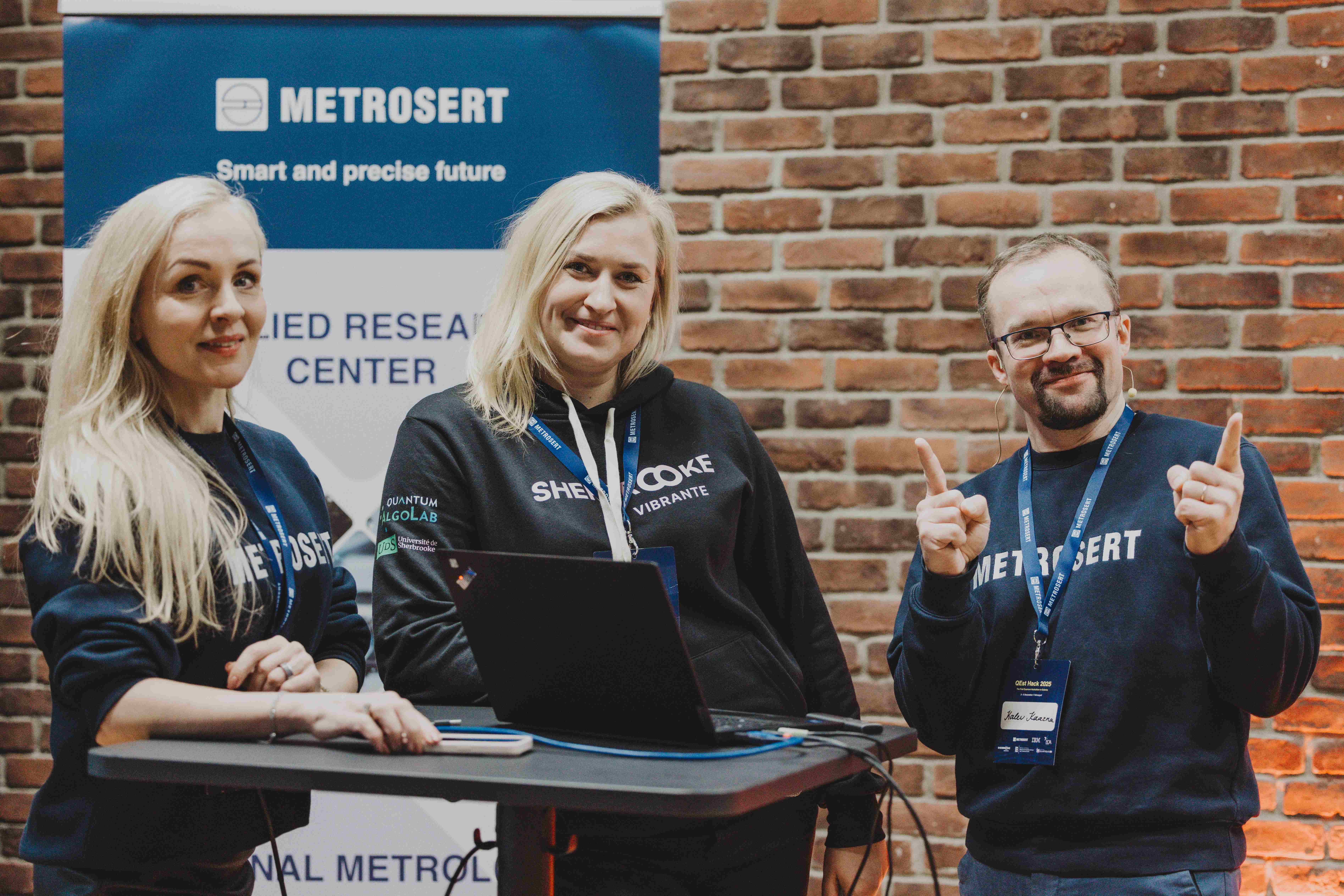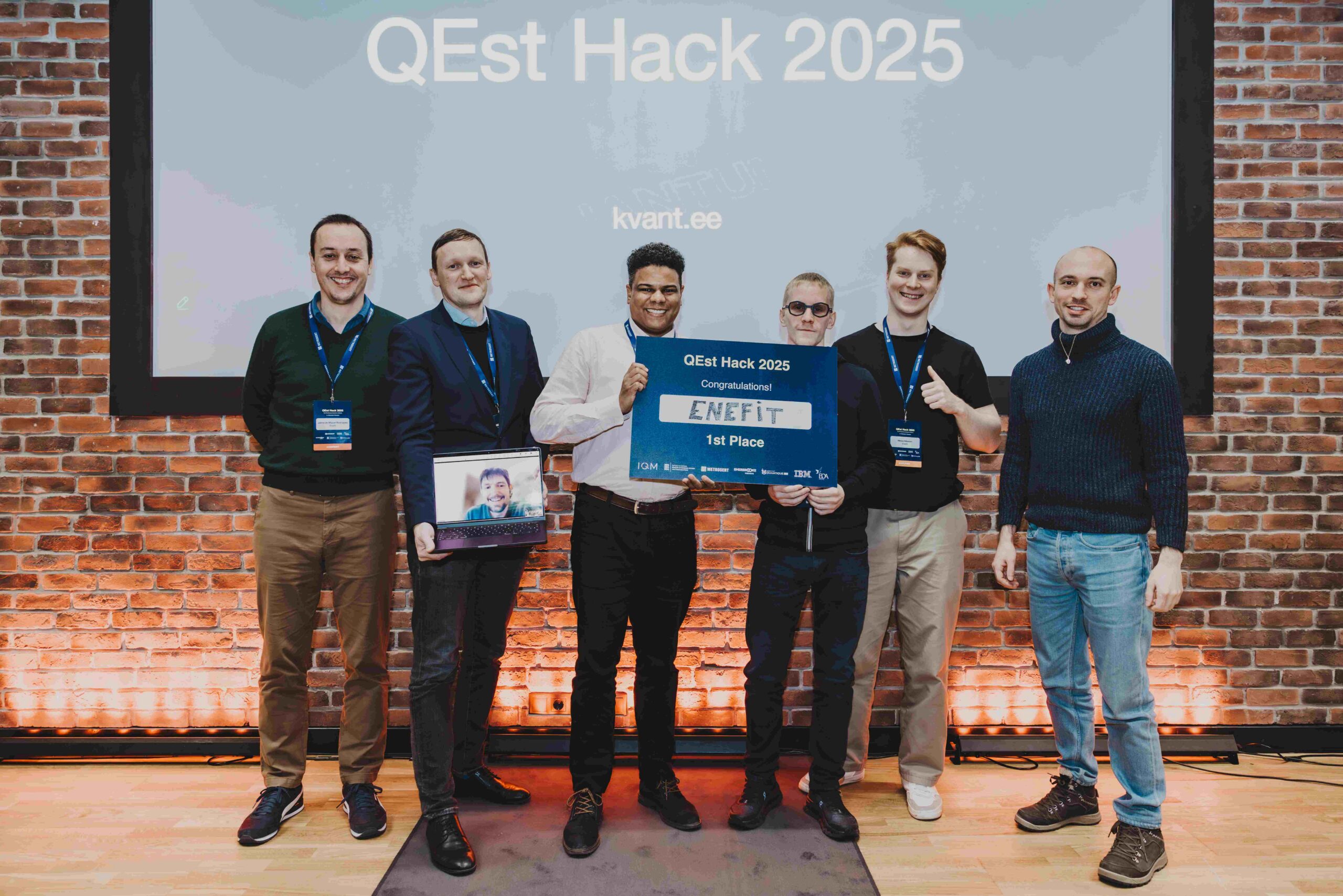
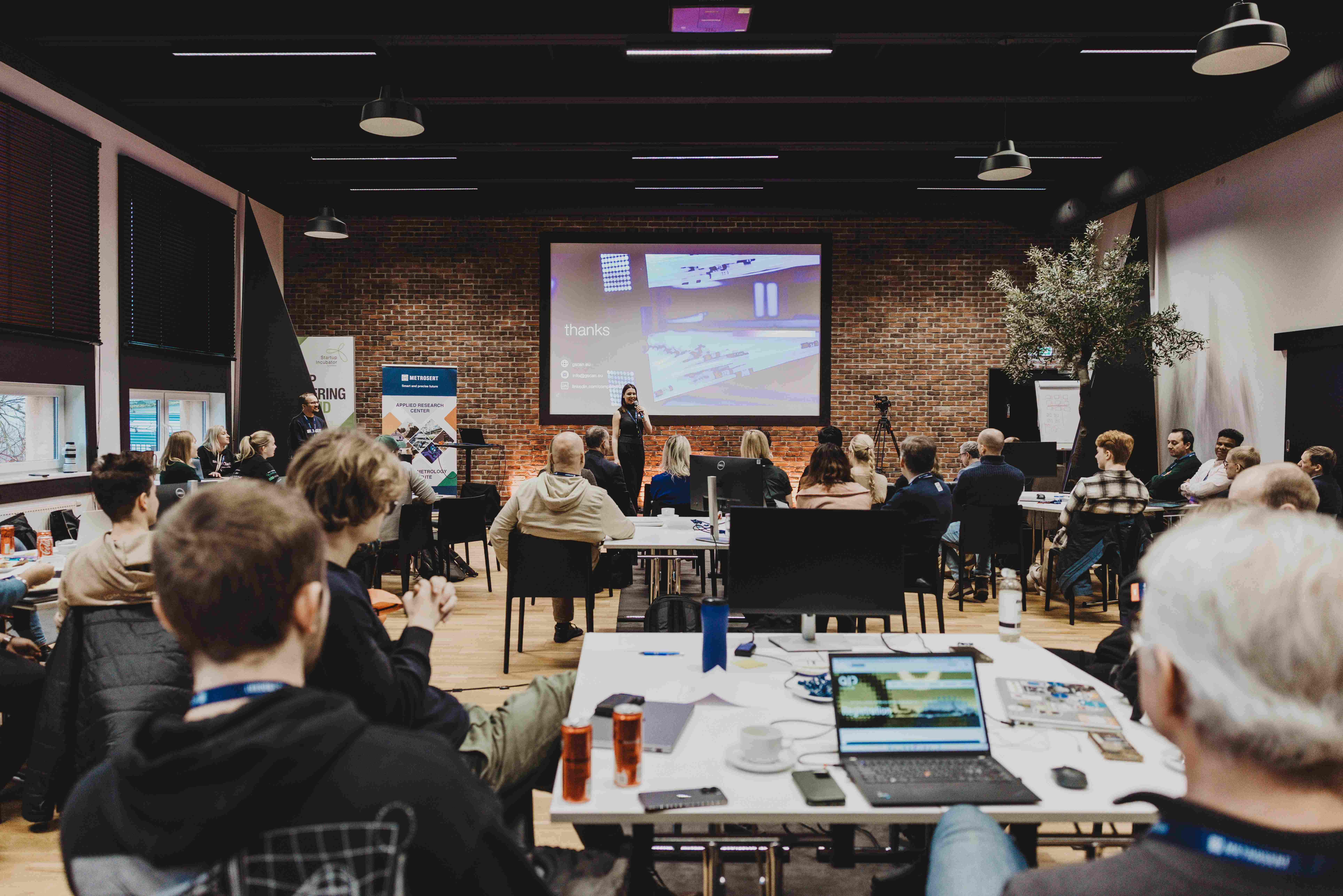
Photos: Tiina-Liina Uudam
Estonia’s first hackathon dedicated to quantum computing, QEst Hack 2025, confirmed that the field has significant practical potential. Participating companies are already planning follow-up projects, and several students who contributed to developing solutions received offers to continue working on their projects as part of internships.
According to Nataly Dubbelman, Metrosert’s Quantum Technology Coordinator and the organizer of the hackathon, the event, held from December 3–5, aimed to establish the first practical connection between Estonian businesses and quantum computing, giving companies the opportunity to evaluate in which areas quantum technology could be applied in the near future.
“We helped companies and technology enthusiasts understand in which problems it makes sense to start thinking about quantum algorithms and how these could bring real-world benefits,” she explained.
During the hackathon, teams consisting of students and company employees worked on challenges presented by five companies under the guidance of international mentors.
“Enefit, Gscan, mu-ray.tech, Oixio, and Activa Finance were the first brave companies to bring their complex optimization problems to the table. The teams sought more efficient solutions using quantum computing for tasks such as electric vehicle fleet charging schedules, debt analysis, chip architecture, predictive algorithms for 3D scanning, and organizing consultancy team staffing, using IBM’s and IQM’s cloud-based quantum computing environments to test their concepts,” described Kalev Kaarna, Metrosert’s Sales Manager for Research Projects, who moderated the hackathon.
Although most participants had not previously worked with quantum computing, all teams were able to translate a business problem into a form suitable for a quantum algorithm within 24 hours. “In several teams, the collaboration between students and company specialists was so successful that the students were offered to continue the project as part of an internship program,” Kaarna noted.
According to the organizers, all participating companies confirmed that QEst Hack allowed them to genuinely assess the potential of quantum computing in their fields. Kaarna highlighted that one company’s analysis showed that a 4–7% improvement in accuracy using quantum computing could translate into up to €500,000 in annual savings.
“Even more importantly, the hackathon mentors demonstrated how quantum-inspired methods can already be used in existing supercomputing environments—meaning we don’t have to wait for quantum computers to arrive to benefit from quantum computing,” Kaarna said.
Several companies, including Enefit’s winning team, plan to continue with feasibility studies and development projects in collaboration with universities. Kairi Otto, Technology and Knowledge Transfer Advisor at the Ministry of Economic Affairs and Communications, who participated in the hackathon jury, said the pilot event clearly confirmed that Estonia has both the interest and the capability to adopt quantum computing for practical use.
“The Enefit winning solution showed that quantum computing can deliver real cost savings and improve the efficiency of energy infrastructure. The more Estonian companies research, experiment, and learn to apply quantum technology, the smarter and more internationally competitive our future solutions will be,” Otto said.
According to Nataly Dubbelman, significant investment in developing new skills is also crucial for building Estonia’s quantum technology ecosystem.
“Universities and ministries play a key role here, as they can support the development and launch of next-generation quantum computing curricula. The quantum computing microdegree opening at the University of Tartu in February is a good start, and we will undoubtedly see its positive impact at the next hackathon,” she added.
Estonia’s first hackathon dedicated to quantum computing, QEst Hack 2025, was organized by Metrosert in collaboration with IBM, IQM, and the city of Sherbrooke in Canada, and supported by the Ministry of Economic Affairs and Communications. Mentors at the event included experts from the Sherbrooke University Institute for Quantum Computing, as well as representatives from the quantum computing field in Finland and Latvia.
Additional Information:
Nataly Dubbelman
Quantum Technology Coordinator
QEst Hack 2025 Chief Organizer
+37257824795
nataly.dubbelman@metrosert.ee