According to Ermo Vihtre, Head of the Laboratories of the Drone Technologies Unit at Metrosert’s Applied Research Center, he has found his ideal challenge at Metrosert. Today, he and his team are building one of the country’s most unique testing laboratories, where drones face the most extreme conditions humans can artificially create.
Vihtre notes that he is not as captivated by the technology itself as he is by putting it to the test—the moment where promise and reality meet, or fail to meet.
“For me, testing is not the end of product development, but the place where it becomes clear what the technology is actually capable of. If a system only works under controlled conditions, the knowledge is incomplete. Testing helps confirm that something works and helps us understand when it stops working—to make the product better. Sometimes, this process has to be painful.”
Taking Away the Hammer Ignited a Passion for Tech
This mindset did not originate at work, but much earlier. Growing up in the village of Ervita by Lake Väinjärv in Central Estonia, Ermo’s first tool was a hammer, which he used to try and fix everything he could.
“To make my approach ‘more constructive,’ my father soon took it away, gave me a toolkit instead, and showed me the proper techniques,” he recalls. This sparked Ermo’s interest in mechanics, particularly two-wheelers—a passion that remains today.
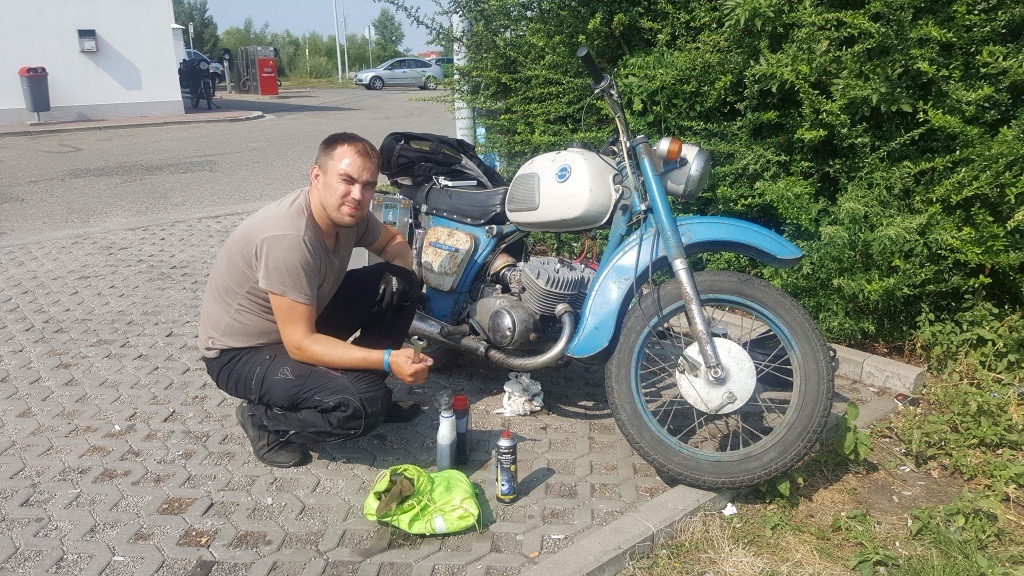
In his spare time, he restores vintage motorcycles. “I’m not drawn to new Western bikes, but rather to vintage machinery with its own history and character,” he says. He owns several old motorcycles that he restores and occasionally rides. Additionally, he is a member of the NGO Estonian Vintage Motorcycle Club UNIC-MOTO, which connects enthusiasts and promotes the preservation of vintage technology in Estonia.
This interest has gradually passed down to his three sons. “My two younger sons are still in the ‘hammer phase,’” he says with a smile, “but the eldest, 12, is already capable of participating in exciting vintage restoration projects.”
Teachers Paved the Way
While a broken item today can simply be replaced, it wasn’t that easy during Ermo’s childhood. “I had to settle for my sister’s old bike. If I wanted it to move, I had to know how to repair it myself,” he says.
His teachers played a significant role in shaping his skills. Craft teacher Tõnu Grauberg provided manual dexterity, logical thinking, and the ability to read blueprints alongside woodworking skills. In auto-mechanics classes under teacher Mait Raudsepp, the picture became even broader.
“We didn’t just study traffic to get a license—we looked at sectionalized engines to understand how systems actually work. This made machinery feel familiar to me.”
In the 11th grade, while visiting the Teeviit fair in Tallinn, he came across the Mechatronics booth of the Tallinn University of Technology (TalTech). Combining mechanics, electronics, and computers felt like a logical continuation of his interests—and that is where he went to study. He remains happy with that decision to this day.
Technology at Sea, on Land, and in the Air
Before arriving at drone technologies, Ermo’s experience was already highly diverse. He spent a year in the Navy aboard the minehunter Sakala as an armament systems technician.
“There, I worked with devices that we call underwater drones today—battery- and camera-powered robots that moved to a mine and destroyed it at the cost of their own existence,” he describes.
Ermo’s longest and most influential career stage was at ABB, where he worked for nearly ten years while simultaneously earning his bachelor’s and master’s degrees. “This gave me a very strong production and engineering foundation. We were all young and ambitious, and we grew together like a small family—everyone gave their all.”
At ABB, he focused on developing test fields and discovered testing as a systematic discipline. “You have a concrete goal—for example, a new generator must be tested in four months. You build the entire missing capability from scratch and are responsible for the result.”
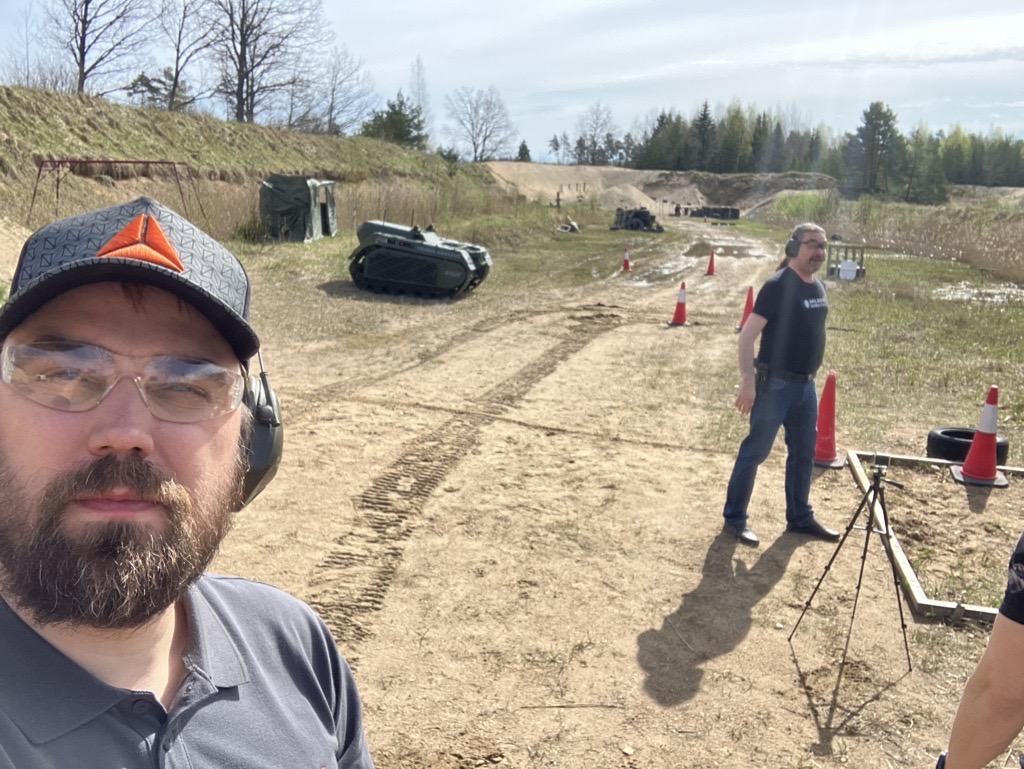
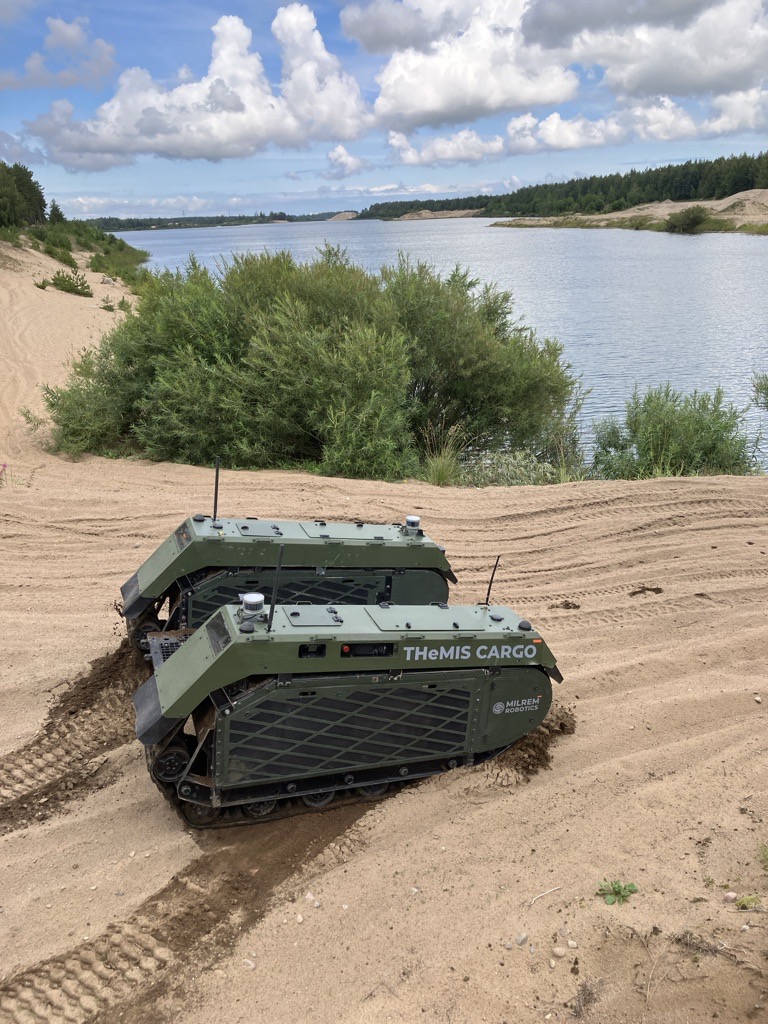
At just 30, he was leading development projects in the million-euro range. It was there that a clear understanding of his next goal emerged: to lead his own team and focus on testing. This opportunity was offered by Milrem Robotics, where he was responsible for testing various projects—the most famous being the THeMIS unmanned ground vehicle—and where he built a strong testing team.
“There, I realized that a drone is not just a machine, but part of a system. Externally, it might look like a small tank, but behind it are dozens of engineers and developers dealing with mechanics, electronics, software, armament integration, autonomy, maintenance, and more. Testing is closely linked to all of that,” he explains.
It was at Milrem that he experienced how important it is to test systems from the end-user’s perspective. “A soldier doesn’t always use a solution the way the developer intended. They receive short training and immediately act as seems logical, without memorizing the manual. It is precisely such a user who brings out problems that might not be seen during internal testing, and such information is worth its weight in gold for development,” he confirms.
The Lab That Was Needed
His first contact with Metrosert also took place while working at Milrem. “We had individual testing solutions, but we lacked a comprehensive laboratory capability where we could conduct climate, vibration, or EMC tests on both subsystems and the entire machine,” he says.
When Metrosert presented their concept to Milrem, Ermo’s first thought was: this is exactly what we have been looking for. When Metrosert invited Ermo for an interview and unit head Rainer Kivimäe introduced the plans in detail, he was sold.
“I played it cool, saying I had to consider it, but actually, the decision was made for me during the first meeting.” After a second round of interviews, an offer came, and he joined Metrosert. According to him, it is now clear that Metrosert is an organization where he wishes to stay for many years.
“There is a very good balance here between stability and development—a state-owned company with a long history that thinks more like a private enterprise. The major changes in recent years have created new units and business directions, opening many new growth opportunities. Metrosert is undoubtedly a place where a specialist has a long-term perspective.”
A Turbulent First Year
The first year as the head of the drone lab has proceeded in a constant wave of change—from procurement and room preparation to commissioning equipment and building a capable team.
“Buying equipment is easy—but that’s maybe a third of the work,” he says. “How to get them running, what else is needed, and how to turn it into a real service is the much more complex and exciting part.”
The capability of the lab under construction is new to Estonia. It includes climate and altitude simulation chambers, accelerated life testing, ingress protection (IP) rating labs, vibration and acoustic labs, material testing labs, EMC, RCS, and immunity testing. Also large-scale climate chambers and planned outdoor testing areas. These allow for the simulation of conditions that would otherwise have to be sought in the field. “You don’t have to go to the desert to get heat and dust, or take a ship to sea to see what salt does to a product,” he says.
He gives the example of salt fog, which is far more aggressive than the salt chambers found in spas. “In one test, it became clear within a few days that two materials, which were thought to be compatible, began to react with each other. This is valuable information for the client, because later repairs are always more expensive than fixing a flaw discovered during testing.”
The same applies to vibration. In the lab, a camera system intended for an armored vehicle can be subjected to a 48-hour “shaking” profile to identify resonance points and allow for immediate design adjustments.
Testing as Trust
According to Ermo, companies today have a strong understanding of the need for testing. “Inquiries come in constantly—can you test this product according to a specific standard, can we partner with you on a development project? Often we are involved right at the start of the development phase.”
One of Metrosert’s greatest advantages is responsiveness. “We respond to the client within a couple of days at the latest. If a certain test cannot be performed, we say so honestly and help find a solution through partners. If there is sufficient demand for a capability we lack, we add it to our investment plan.”
In the future, he sees the lab as a hub for increasingly complex tests throughout the entire development cycle.
“Drone technology is developing at a breakneck speed. Today, most demand comes from the defense sector, but the future is also promising in civilian use—technologies for search and rescue, responding to crises, space exploration, agriculture, and logistics,” he explains.
Responsibility Beyond the Workplace
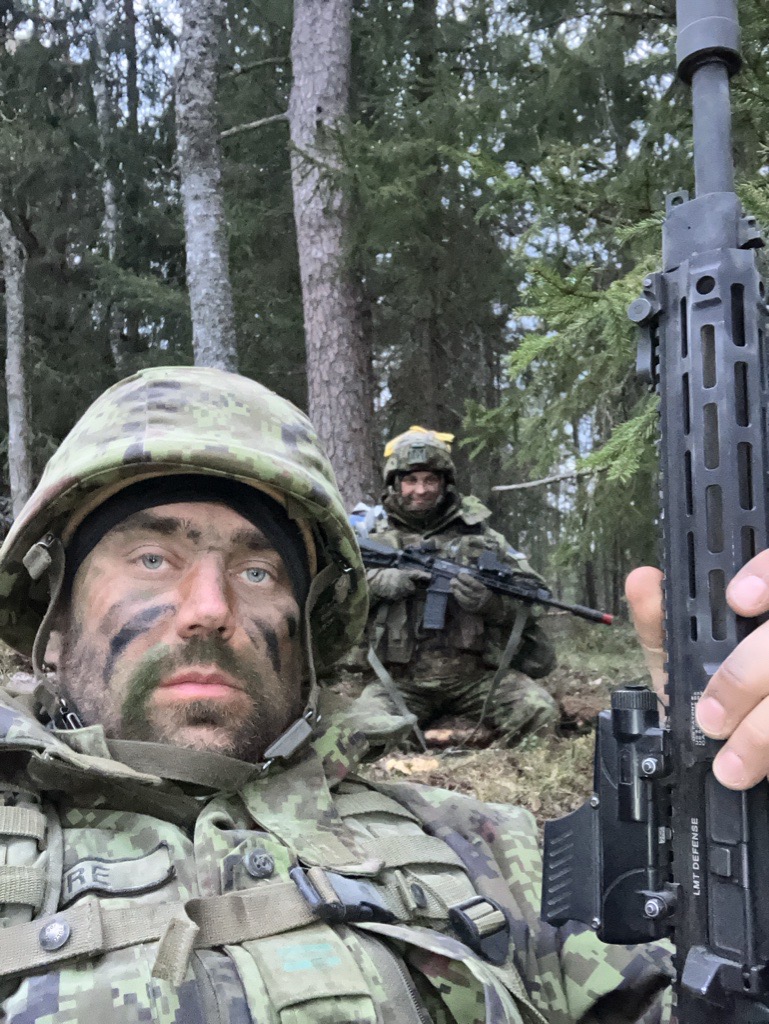
Ermo’s work has brought drones into his personal life as well. “I am a member of the Estonian Defence League—perhaps not the most active, but when called for exercises, I go,” he says. Recently, he was invited to join the Defence League’s drone unit. “It seemed like a logical idea. Against the backdrop of global events, I can be useful with my skills.”
In a drone unit, this involves more than just flying; it requires assembly, flight preparation, maintenance, and repair. The reason he contributes to national security is simple:
“I want my three sons to be able to live in the same beautiful, clean, and safe Estonia where I grew up. Every parent knows what I’m talking about—ultimately, all your actions boil down to ensuring your children have a good life.”