
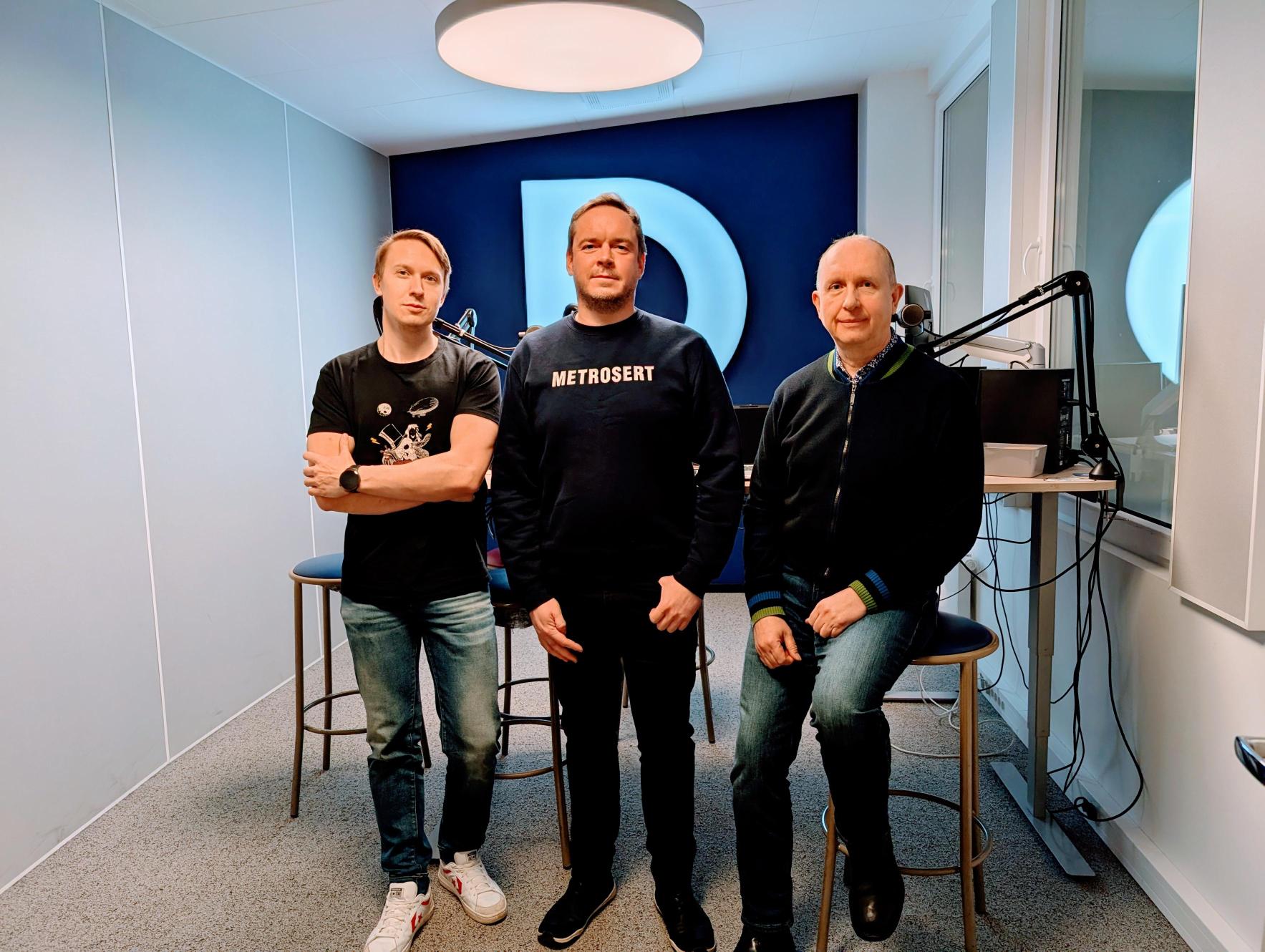
Taaniel Tigas, Head of the Autonomous Vehicles Unit at Metrosert, analyzed the development of self-driving technologies and their integration into today’s traffic environment in the podcast “Istmesoojendus” (“Seat Heater”). The discussion focused on technological readiness, the regulatory framework, and the role of Metrosert Applied Research Center in the safe development of the field.
Technological Challenges
Wider adoption of autonomous vehicles requires a systematic approach to technical standards and precise definition of the different levels of vehicle autonomy. One of the main objectives of the development process is to ensure system reliability under varying environmental conditions.
Conditions typical for Estonia, such as snow and fog, place high demands on sensor capabilities. It is critical that self-driving systems are not limited to favorable weather conditions but can operate stably even in challenging environments.
Mixed Traffic and the Role of Artificial Intelligence
During the transition period, when roads carry a small number of autonomous vehicles alongside the vast majority of human-driven vehicles, there is a need to address the challenges associated with mixed traffic. While AI strictly follows traffic rules when making decisions, human drivers often make intuitive decisions or adapt the rules. One of the central questions in the development process is ensuring smooth integration of self-driving vehicles into the existing traffic culture.
In situations where traffic hazards cannot be completely avoided, a robot car makes decisions based on probabilistic calculations. The system’s goal is to select actions that maximize the likelihood of avoiding accidents.
Infrastructure and Economic Life Cycle
An autonomous vehicle requires a supportive environment to function. Preparing the traffic space involves two directions:
- Physical infrastructure: clearly visible road markings and traffic signs.
- Digital support: accurate dynamic maps and data communication capabilities that allow the vehicle to interact with other cars and traffic management systems.
From an economic perspective, technology development is resource-intensive. At this stage, the greatest potential is seen in public transport, logistics, and operations within closed areas where movement patterns are repetitive. It is important to note that, in current practice, the lifecycle of autonomous vehicles is shorter than that of conventional vehicles and is determined by the manufacturer. The spread of the technology directly depends on the ability to reduce costs compared to human-driven transport.
Metrosert’s Role in the Field’s Development
The mission of Metrosert Applied Research Center is to provide science-based support and validation capabilities. This helps both companies and the public sector mitigate the risks associated with innovation. The center’s contribution lies in creating a safe environment where technological solutions are tested, reliable, and compliant with established standards.
The full discussion is available in Estonian on the auto and technology portal Accelerista and Delfi Tasku or Spotify platform as part of the podcast series „Istmesoojendus“.