
Author: Mari Aru, Head of the Research and Development Division at Metrosert
What would happen if we woke up one morning in a world where the international system of units no longer functioned? How quickly would societal chaos arise in a situation where different people and countries understand differently how long a metre or a second is, or how heavy a kilogram is? Everyone should think about this scenario this Wednesday, 20 May, when World Metrology Day is celebrated, writes Mari Aru, Head of the Research and Development Division at Metrosert.
We take our daily measurements completely for granted, without realizing that there is a complex system behind them. We wake up to the sound of an alarm clock or look at the clock immediately after opening our eyes, thus starting our day with measurement. We drive to work – all transport is one continuous cycle of precise measurements. The list could go on. Precise measurements are the basis of our well-being; among other things, they ensure that our phones work, that the communication network functions, that our food does not spoil, and that medicinal doses do not kill us.
Metrology, or the science of measurement, is like an invisible safety net that deals with developing increasingly precise measurement methods and ensuring the comparability of measurements, so that we can measure in Estonia exactly the same way as people do on the other side of the world. Any production, from weapon systems to the pharmaceutical industry, is based on precise measurements.
The System of Units Is Constantly Evolving
It is important to understand in this regard that measurement units are an international agreement. The roots of the modern SI system of units lie in the French Revolution, and its legal basis is the Metric Convention signed on 20 May 1875. This is an international agreement that established the system and organizations whose task is to keep the units stable and develop them further as needed. On the birthday of the Metric Convention, 20 May, World Metrology Day is celebrated.
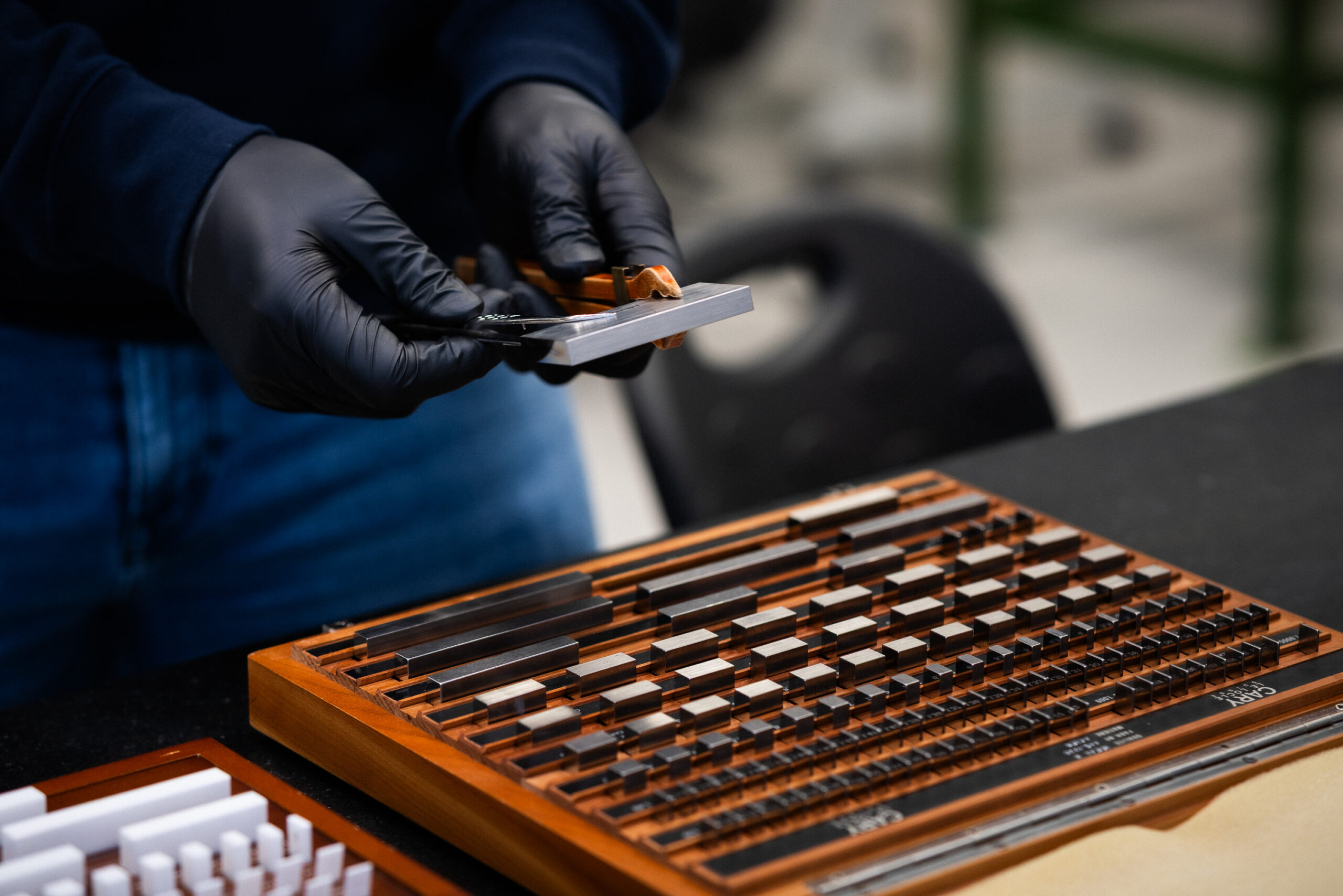
If we want to develop innovative technology in Estonia and keep our industry competitive, we must ensure that companies have access to reliable measurements with which to validate their technology. We also need to think through which measurements can be outsourced to the country and which we need in situations where cross-border services do not function for one reason or another, because precise measurement can also be a security issue.
For example, in the discussion about establishing a nuclear power plant, precise radiation measurements cannot be forgotten, and for emergencies, it is important to ensure that such a capability exists in Estonia. It needs reflection which part of our metrological system should be treated similarly to critical infrastructure and what are the capabilities we need in the country in the near future from both a technology development and security perspective.
Policy Decisions Must Also Be Based on Measurements
World Metrology Day 2026 is dedicated to measurements that build trust in policymaking. Behind the bureaucratic title is the idea that good policymaking begins with reliable measurements.
One of the most resonant recent topics in almost every policy area is artificial intelligence. The models that we already often trust to make decisions instead of ourselves must be based on reliable data, because the smartness of the model depends on the quality of the data. Data based on inaccurate measurements leads to errors in decisions.
For example, if sensor data is not accurate, an AI-based self-driving vehicle may not make safe decisions regarding fellow road users. The international metrological community is working to create frameworks that allow assessing the reliability of artificial intelligence applications. In Estonia, too, we should think about what the foundations are that allow us to assess an application as smart enough to allow it to become part of our (political) decision-making process.
151 years after its signing, the ideas of the Metric Convention are still relevant and invisibly support our lives in every field. On Metrology Day, however, each of us can go through a mental game: how long would it take for our familiar social order to collapse if the international system of units one day no longer functioned as such.