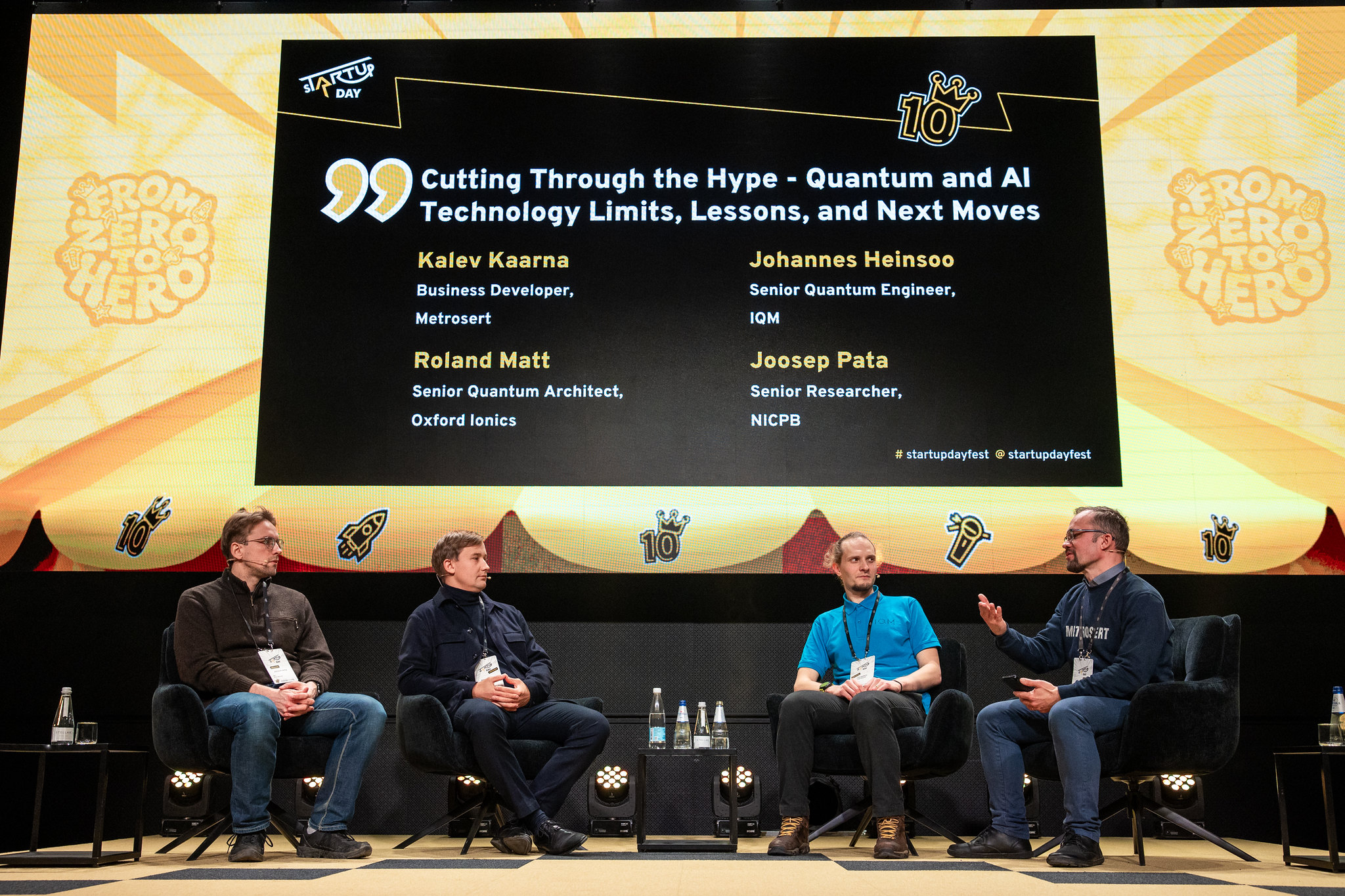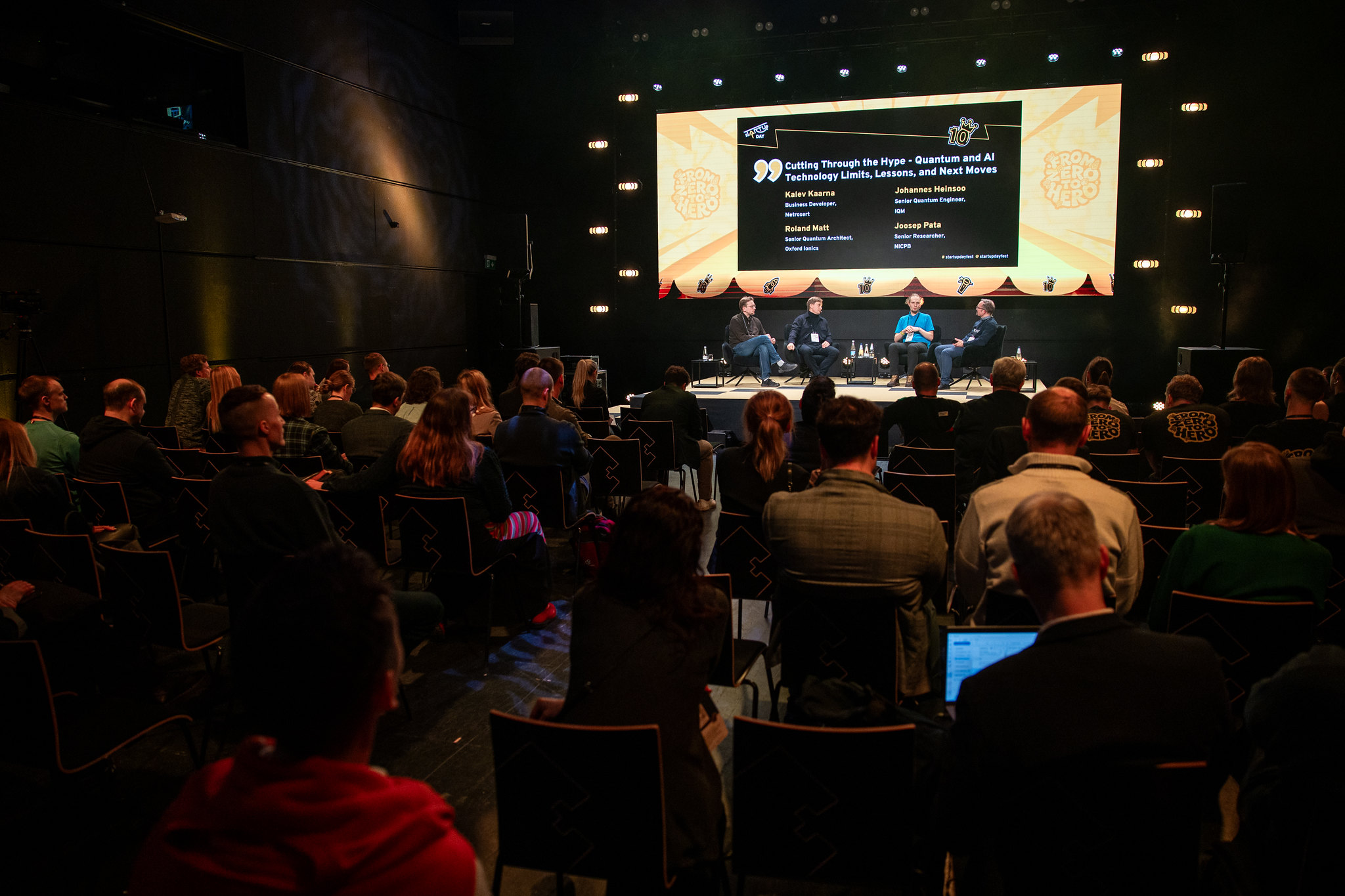
As part of sTARTUp Day 2026, a panel discussion took place focusing on the real role of quantum computing and artificial intelligence, the maturity of these technologies, potential application areas, and Estonia’s strategic position in the development of quantum technologies. The aim of the discussion was to clarify common misconceptions, highlight scientific and technological value, and address practical implementation questions.
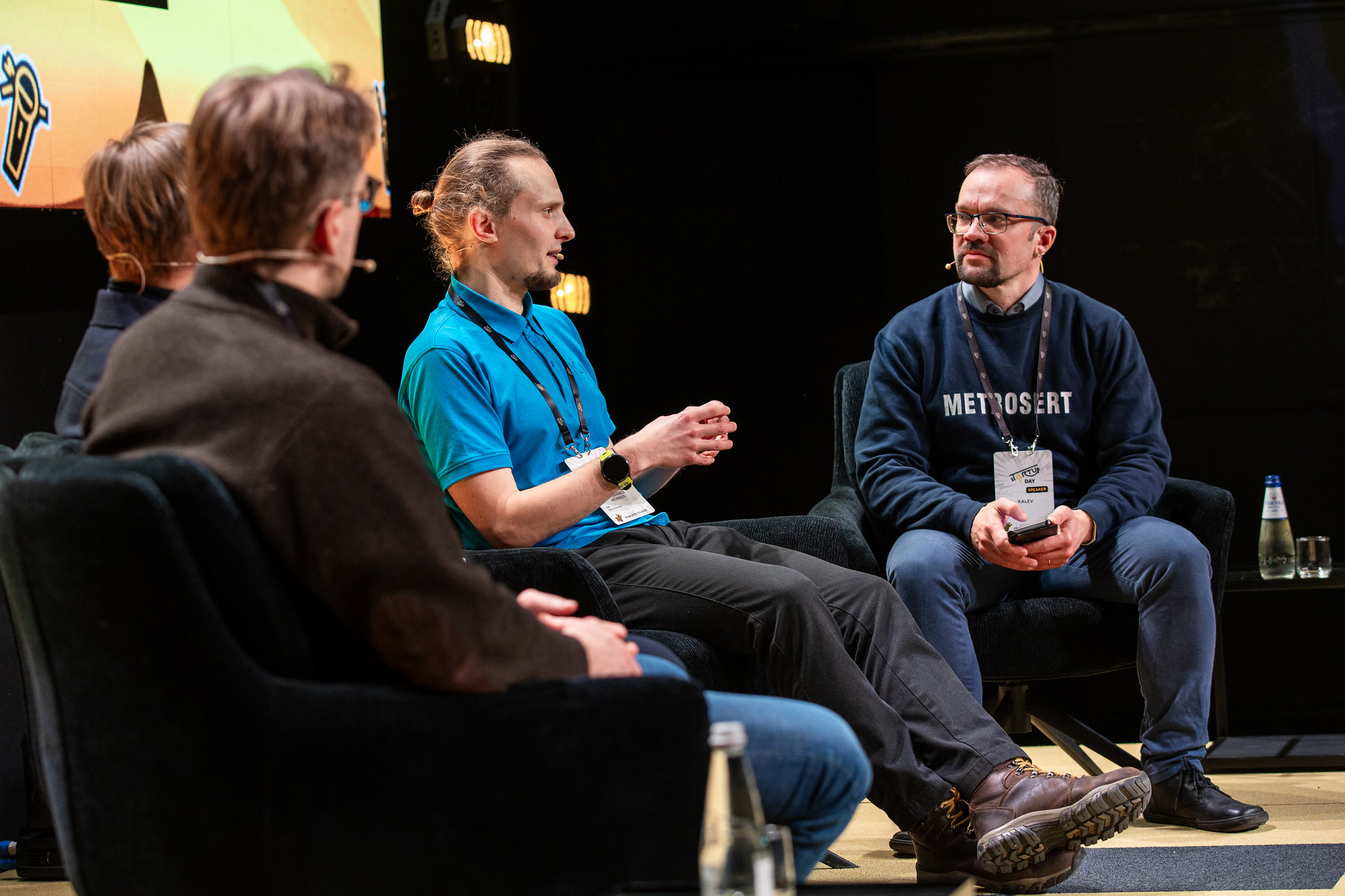
The discussion featured Johannes Heinsoo (IQM), Roland Matt (Oxford Ionics) and Joosep Pata (NICPB), and was moderated by Metrosert’s Business Development Manager Kalev Kaarna. The recording is available on YouTube.
The panelists emphasised that quantum computers are not simply much faster versions of supercomputers. In practice, they may be slower and significantly more expensive, but for the right types of problems the investment can be fully justified. The first practically useful applications are expected primarily in material science, chemistry and pharmaceuticals. The discussion also addressed the question of when quantum computers will be ready for broader industrial use—whether in the coming years or only a decade from now—and how to distinguish between already achievable “scientific advantage” and potential “industrial advantage,” where companies can derive tangible benefits from quantum computing.
Differences between quantum and classical computing were also discussed. Quantum computers rely on probabilistic data processing rather than deterministic results, and many existing algorithms are already becoming outdated in rapidly changing systems. This creates a need to develop new programming languages, software solutions and hardware. It was noted that building quantum computers has increasingly become an engineering challenge rather than a physics one, and Estonia’s strong background in software development and engineering offers important opportunities in this area.
Current applications are seen mainly in scientific research, but companies are also interested in cloud-based solutions, where quantum computers can be used to solve business problems similarly to cloud-based supercomputing services. Successful application requires understanding which business problems are suitable for quantum computing and developing the appropriate applications and expertise to use these systems. In addition to quantum computers, the broader landscape of quantum technologies was discussed, including GPS-independent navigation, secure communications and atomic clocks, where Estonia can make strategic choices.
Various views were shared on where the next promising opportunities lie for keeping pace with and contributing to the rapid development of quantum computing. It was emphasised that Estonia should build its quantum strategy on its existing strengths. The country is strong in software and engineering, and in the international quantum race Estonia could focus on developing software-based quantum applications and becoming a “smart user”—creating and using systems that solve practical problems without developing the entire value chain in-house. At the same time, it was noted that fully leveraging the potential of quantum computing also requires a broader shift in mindset that includes research, development and experimentation in hardware.
The national strategy already builds on existing “lottery tickets.” These include comprehensive education and laboratory systems that enable learning, experimentation and development with engineers and scientists from diverse backgrounds, as well as the presence of top-level research groups that ensure high scientific competence and a strong ecosystem. While infrastructure and physical facilities are largely in place, the next step is investment in people and hardware.
Watch the full sTARTUp Day 2026 panel discussion on YouTube: