
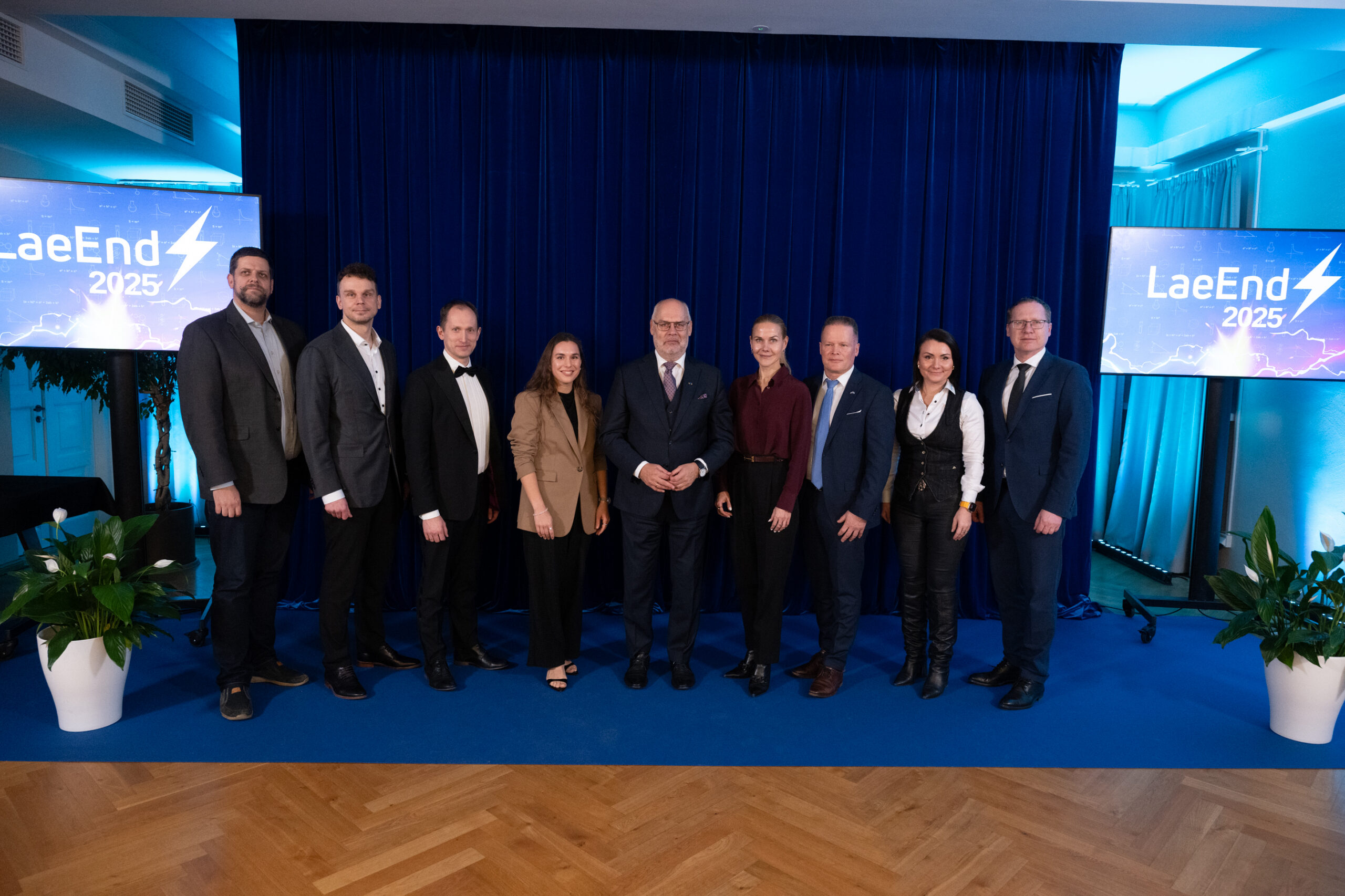
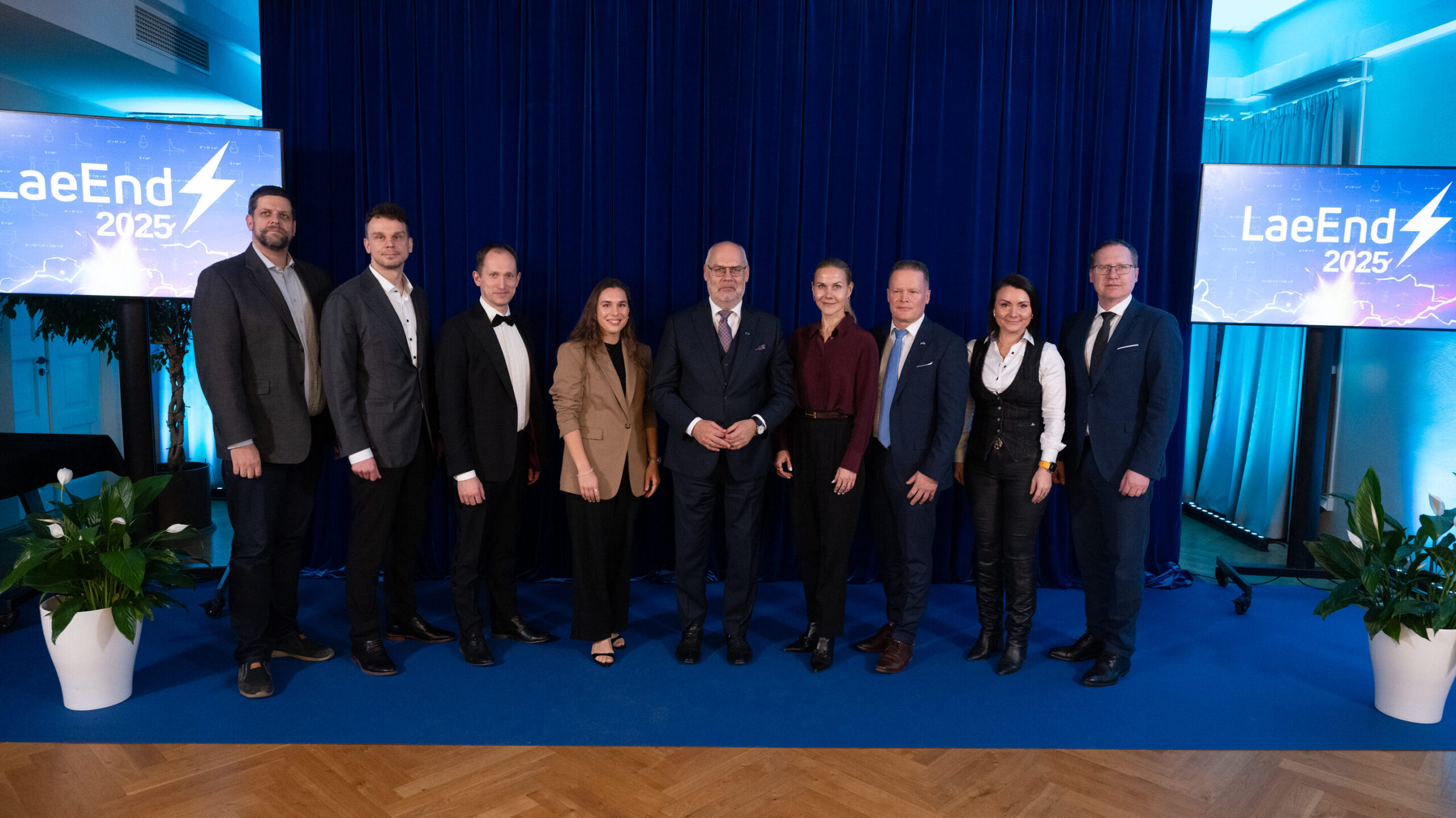
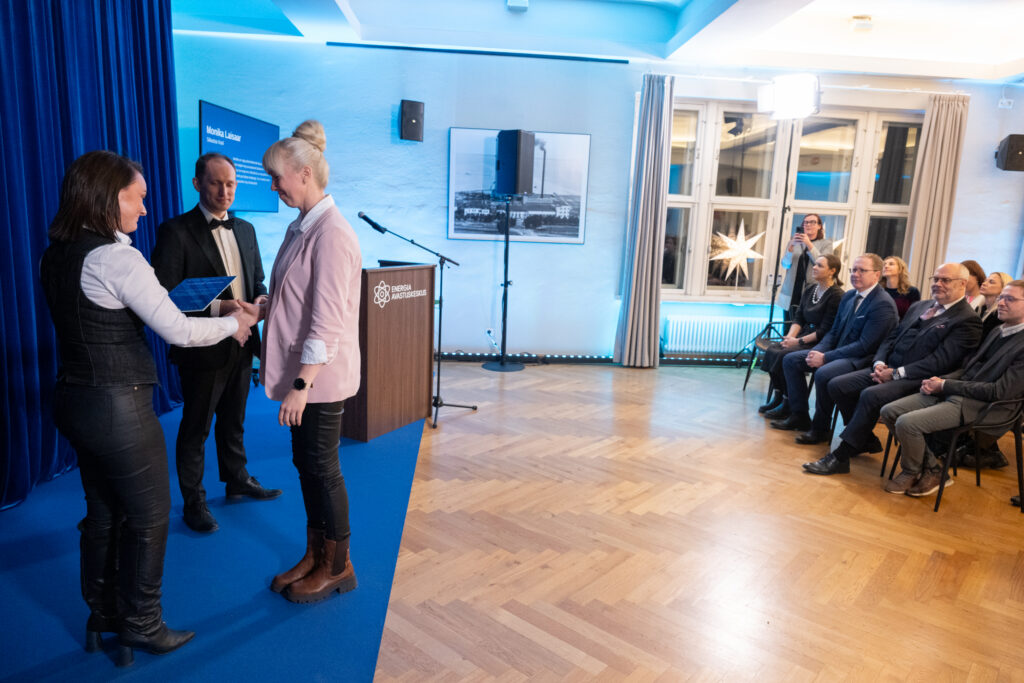
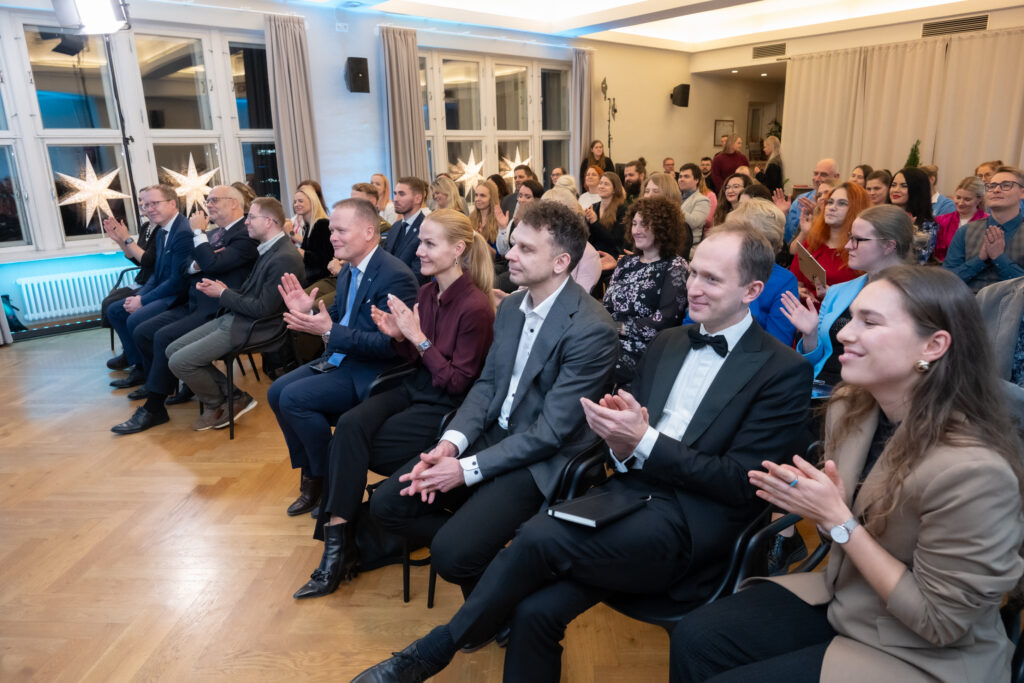
On Friday, December 12, the fourth season closing event of the education program “Lae End” took place at the Energy Discovery Centre, where ten mathematics and ten chemistry teachers were recognized for completing a comprehensive, practical development program aimed at making STEM teaching in schools more engaging and relevant to everyday life.
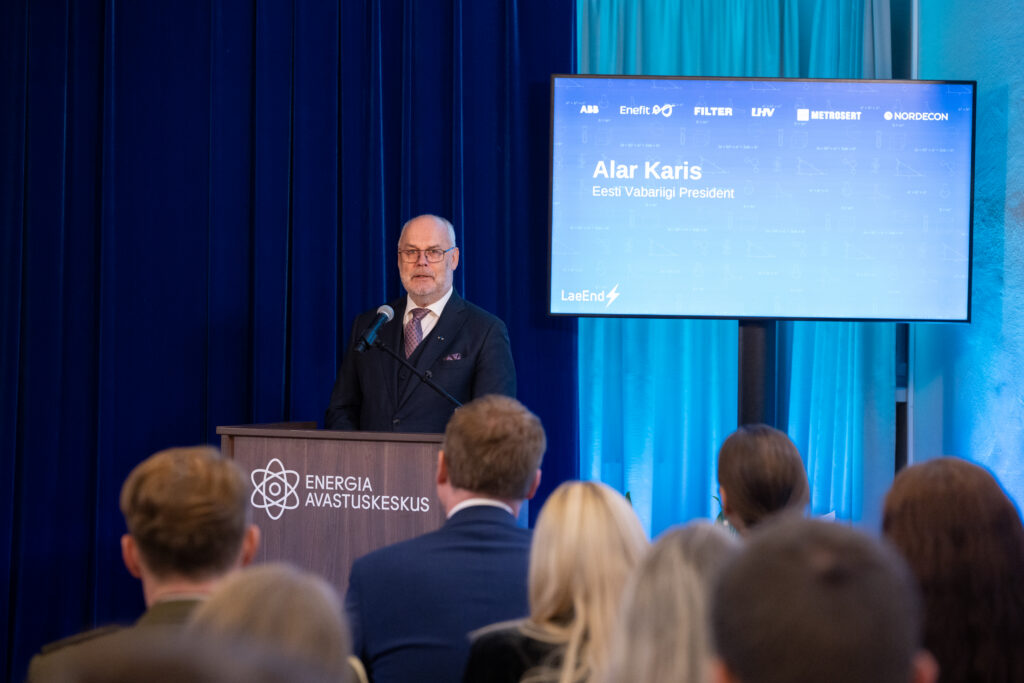
President Alar Karis attended the event as a guest of honor and highlighted the role of teachers in shaping young people’s worldview and fostering interest in science. “We know that in physics, the law of conservation of energy applies — energy cannot be created or destroyed, only transformed. The same is true of teachers’ energy, as the program’s motto says,” the president remarked. According to him, good teachers do not only pass on formulas but also enthusiasm, encouraging young people to understand that mathematics, physics, and science more broadly help explain the world.
For the first time, the fourth season brought together mathematics and chemistry teachers. Working in pairs, teachers developed ten integrated mathematics-chemistry teaching material prototypes that offer playful and engaging ways to teach mathematics, including through board games.
During the program, teachers visited companies that helped launch the education initiative, gaining direct insight into how mathematics, chemistry, and physics are applied in everyday professional life. Participants also received free educational kits for conducting practical lessons, along with a monetary award equivalent to the average teacher’s salary.
According to the Chamber of Commerce’s workforce and skills forecasting system OSKA, there is still a significant need for substitute teachers in Estonia, particularly in mathematics and natural sciences. The “Lae End” program addresses this challenge by supporting teachers’ professional development and helping make teaching more meaningful and motivating.
Over the three previous seasons, the “Lae End” program has produced a total of 63 educational videos covering the lower secondary physics and natural science curriculum. All videos are freely available on YouTube and are widely used in daily school teaching.
The graduates of the fourth season are:
Auli Pärnpuu (Gustav Adolf Grammar School), Erik Aarna (Tallinn Mustamäe Gymnasium), Kaire Kivi (Kindluse School), Katrin Soika (Gustav Adolf Grammar School), Krista Kõiv (Vanalinna Hariduskolleegium, Tallinn English College), Liis Hendrikson (Tallinn Mustamäe Gymnasium), Mari-Liis Vähi (Tallinn Open School), Anastassia Meinson (Iisaku Gymnasium), Julia Rikkas (Kohtla-Järve Slavic Basic School), Neeme Katt (Jõgeva Basic School, Jõgevamaa Gymnasium), Raili Adelbert (Koeru Secondary School, Põhja-Järva School Albu Campus), Annika Reilend (Tootsi Kindergarten-Primary School), Johanna Tammist (Kehtna Basic School), Madli Varik (Kuressaare Vanalinna School), Ave Rüüson (Tartu Mart Reiniku School), Kaire Koonik (Ülenurme Gymnasium), Liisi Röömel (Tartu Lutheran Peetri School), Monika Laisaar (Sillaotsa School), Riko Piirisild (Tartu International School), and Ronald Laarmaa (Viljandi Adult Gymnasium).
“Lae End” is an education program initiated by Metrosert, ABB, Enefit, Fermi Energia, LHV, and Nordecon, aiming to bring STEM subjects and technology closer to young people and connect learning with real life. Last year, Filter also joined the program as a supporter.
Program partners include the Estonian Mathematical Society, Estonian Chemistry Teachers’ Association, Estonian Physical Society, TalTech, TI-Hüpe, Praktikal, Videoõps, and the Energy Discovery Centre.
According to the program organizers, the goal is to foster young people’s interest in STEM through teachers and support the next generation of engineers, scientists, and educators. For Metrosert, as a promoter of applied research and innovation, the “Lae End” program is an important example of how collaboration between science, business, and education can create solutions that extend beyond the classroom.
Photos: Raigo Pajula